
Thousands of People Attended the Niacin Seminar of IPB University
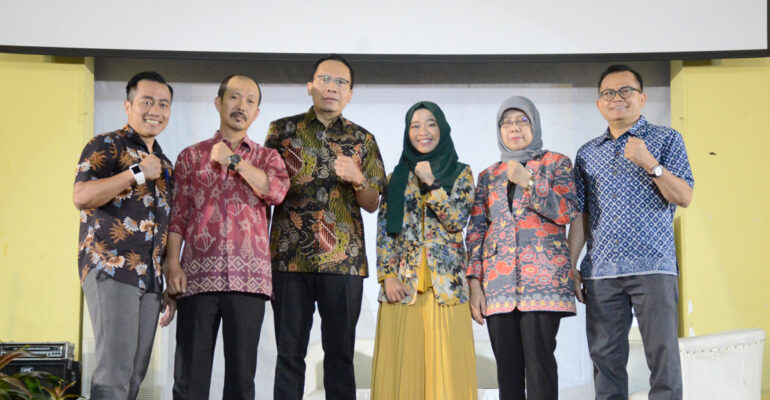
Approximately 2,300 participants attended the 2019 Nutrition Seminar and Charity for Children (NIACIN), Saturday (10/10) at the IPB Dramaga Campus, Bogor, with the theme "Obesity: A New Trend in Digital Era". NIACIN, which was held by the Student Association of the Department of Community Nutrition (Himagizi) of IPB University, was divided into four events; Creativity in Infographic (Creatin), Nutrition Debating Competition (NDC), Crafting Special Recipe (Crispy), and Physical Activity for Healthy Living (Proline).
"Participants were very enthusiastic to participate in the activities. Some even came all the way from outside Java," said Kineta, an IPB University student who is also the Head of Committee of NIACIN 2019.
In addition to the national seminar, the committee also held a charity in the form of fundraising donations. "We conduct charity activities by raising funds from seminar participants. The money we raised will be given to foster the education at SDN 02 Babakan, "said Ananda, a student of IPB University who serves as Chair of Himagizi.
Prof. Dr. Ujang Sumarwan, the Dean of the Faculty of Human Ecology (Fema) IPB University in his remarks explained the changes in human lifestyle from time to time and its impact on health. "This health problem comes from lifestyle patterns and consumption, we will soon listen how to maintain a healthy life strategy along with the development of time and technology," explained the Professor of IPB University.
Dr. Moch Gazali as Acting Task (PLT) Head of the Food Security Office was also present to give a speech as well as officially opening the NIACIN 2019 event. "Improvements and innovations in the health sector continue to be improved, including in the quality of food consumed. Hopefully this seminar will provide knowledge about healthy lifestyles to reduce the number of disease problems including obesity in Indonesia,” said Dr. Moch Mochali.
According to the Head of Sub-Directorate Heart and Blood Vessel for the Indonesian Ministry of Health, dr. Asik, MPPM, there was a transition in one's behavior so that there was a risk of obesity. Starting from lack of physical activity, minimal consumption of vegetables and fruit, and high intake of sugar and salt that caused higher risk of obesity.
Meanwhile, another speaker, an IPB lecturer from the Department of Community Nutrition, Dr. Rimbawan explained that various myths were spread related to the causes of obesity. One of them is Monosodium Glutamate (MSG) which is rumored to cause obesity. "Sodium is a nutrient mineral and glutamate is an amino acid component of protein. Research that shows that MSG causes obesity is still inconsistent. As long as MSG levels are not excessive and appropriate, this is not a problem," said Dr. Rimbawan.
Also present as a speaker was Prof Hardiansyah. He is one of the lecturers of the Department of Community Nutrition IPB University. He explained how to choose the correct diet to achieve body goals. “When planning on a diet, it is important to choose the right diet based on academic researches that is also suitable with the background and purposes of the diet itself. Do not easily fall to someone else’s experience,” said the Chairman of Pergizi Pangan Indonesia.
In addition, Mury Kuswari MSi, the Chairperson of the Indonesian Nutritionist, Sports and Fitness Association (ANOKI) suggested on utilizing technological sophistication features in maintaining a healthy lifestyle. Technological sophistication tends to encourage lack of physical activity and increase laziness. The strategy is to take time to exercise and optimize the applications or features of smartphones with the theme of healthy living and exercise.
Also present was professional nutritionist from WHO-Indonesia, Dr. Sugeng Eko Irianto. He explained the global policy program to tackle obesity. "Increasing awareness of healthy living, physical activity, and balanced nutrition are the main points in reducing obesity rates globally. On the other hand, a healthy lifestyle must be improved, especially in urban communities. City or urban residents have a higher risk of obesity, with easy access to delicious, cheap and tempting processed foods," explained Dr. Sugeng.
Not only from doctors and nutrition experts as well as health experts, NIACIN 2019 also presented psychology experts, namely Naomi Ernawati MPsi, Psi. According to her, there was a close relationship between emotion and desire to eat, including overeating. "One of the therapies for obese patients is with mental therapy, that the consumption of foods that are important is healthy and balanced nutrition is not excessive," said Naomi as clinical psychologist at PT Shape-Up Indonesia.

