
Sugar Can Cause Addiction
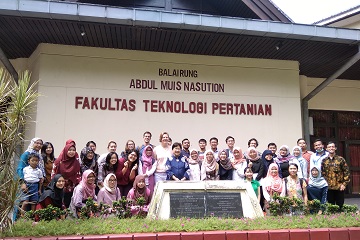
The Department of Food Science and Technology (ITP) of Bogor Agricultural University (IPB) held a studium generale titled “Sugar and Sugar Alternatives: Characterization, Health Aspect and Application” at Abdul Muis Nasution Auditorium, Faculty of Agricultural Technology (Fateta), IPB Dramaga Campus (23/3). The speakers were Kataryzna Swiader, a lecturer at the Faculty of Human Nutrition and Consumer Sciences, Warsaw University of Life Sciences – SGGW Poland. Participants attending the activity came from various departments in IPB, as well as student exchange representatives from Poland and Thailand.
Kataryzna Swiader described the various types of sugar in general such as sucrose, lactose saccharin, aspartame, cyclamate, and so on. She also explained the characteristics of various types of sugar, its impact on health, and its application in food.
"Sugar can cause addiction, thus, we have to look for another alternative. Various diseases are caused by sugar, for examples, diabetes, obesity, heart and circulatory system disease, immune decrease, caries in teeth, aging process acceleration," said Kataryzna.
Kataryzna also mentioned a variety of sugar alternatives from natural ingredients such as honey, stevia plants in South America, Lo Han Gou from China and South Asia, Agave Nectar from agave plants, and so on. These natural ingredients have the same composition as sugars such as sucrose, fructose, and glucose, but they contain more benefits than sugars like antioxidants to treat diabetes, cancer, allergies, liver disease, stomach ailments as well as increasing body endurance.
The event coordinator, Prof. Dr. Ir. C. Hanny Wijaya, M.Agr, said that this activity was an effort to strengthen cooperation between Fateta with the Faculty of Human Nutrition and Consumer Sciences.
"We work together on several things, including the exchange of students and lecturers. With this lecture, students will be able to obtain broader insight related to food technology and its implementation," said one of the teaching staffs at the Department of Food Science and Technology (ITP) of IPB.
Prof. Hanny also hoped this cooperation is not only between two faculties, but it can reach a wider range, such as between universities that will involve many faculty in it. (TK).

