
A Group of Experts of IPB: The Implications of Giant Sea Wall (GSW) Construction for Coral Reef Ecosystems in the Gulf Jakarta
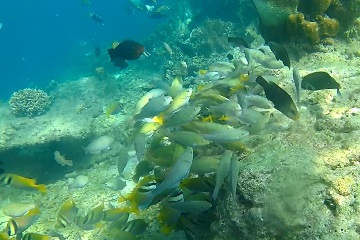
Coral reefs are underwater masses composed of living coral polyps, and the limestone skeletons left behind when these tiny animals die. Coral reef ecosystems are very sensitive to environmental changes, and are expected to accelerate in the event of an adjacent reclamation project. Tropical reefs, in particular, are teeming with sea life, populated by sea fans, sea urchins, worms, sponges, fish, and crustaceans, and are important breeding grounds for fish. They are particularly vulnerable to human activities, therefore there are a number of national and international efforts to increase protection of coral reef ecosystems. Ocean acidification, or increased CO2 levels which result in the lowering of the pH of seawater, not only reduces the abundance of phytoplankton but also decreases calcification in certain marine animals like corals and shellfish, causing their skeletons to become weaker and growth to be impaired. Possibly one of the greatest threats facing corals, however, is that of bleaching as a result of increased sea surface temperature.
A group of experts of the Department of Water Resources Management of the Faculty of Fisheries and Marine Sciences of Bogor Agricultural University (FPIK IPB), namely Agustinus M. Samosir, Ario Damar and Hadiana, carried out research program related to the Giant Sea Wall (GSW) implications for coral reef ecosystems in the Gulf Jakarta. This study was implenented among others to assess the environmental impact on corral reefs. Furthermore, this study aims to map the resilience of coral reefs of Jakarta Bay based on ecosystem status, function and services, and provide management measures, both for coral reef and GSW project itself.
Augustine said the preliminary report of the research revealed that almost all coral reefs in Jakarta Bay are dead or destroyed before any giant reclamation or embankment projects, either due to pollution, mining or illegal fishing. The water inside the seawall would become a big pond of pollution. It would become worse if the city administration did not start to tackle the pollution in the rivers. The environmental impacts like the loss of coastal habitats and the transition to fresh water and poor water quality in the large reservoir after closing the sea wall were also reported. Only Pari Island is located just outside the bay which is in good condition, although slightly depressed due to reclaimed dust from sedimentary transport vessels.
However, compared to pre-project conditions, water quality improved due to trapping pollutants and sediments behind artificial islands. Especially for G Island, there has been a process of erosion / declamation due to the halt of the reclamation process. Therefore, this researcher recommends to continue reclamation of Island G, but not for the giant embankment project which is very high risk either ecologically, socially or economically. (Wied)

