IPB University Deploys 614 Animal Health and Qurbani Meat Inspectors for Eid al-Adha 1446H
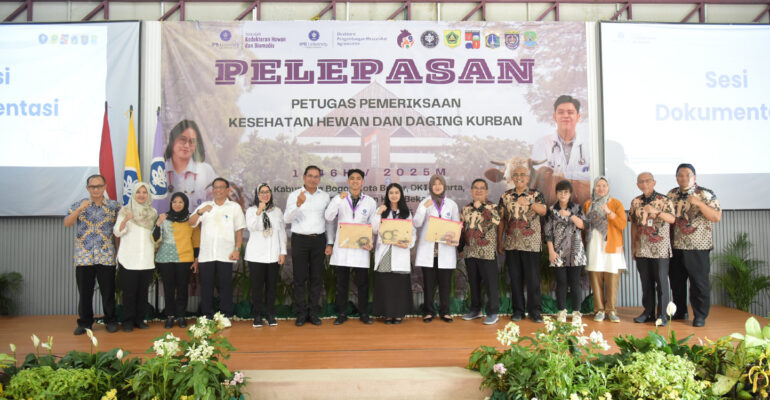
In anticipation of Eid al-Adha 1446H, the School of Veterinary Medicine and Biomedical Sciences (SKHB) at IPB University has deployed 614 animal health and qurbani meat inspectors. The team consists of 66 faculty members and staff, as well as 514 students from various levels (veterinary medicine undergraduates, veterinary medicine professional education students, and postgraduates).
They will be deployed to several areas in Bogor Regency, Bogor City, Depok City, and the Jakarta Special Capital Region to ensure that the qurbani rituals are conducted in a healthy, safe, and high-quality manner. The deployment ceremony took place at the SKHB Transformation Hall, IPB University Dramaga Campus (6/4).
Dr Alim Setiawan Slamet, Acting Rector of IPB University, stated that this program is rooted in the spirit of service and humanity of the SKHB academic community to ensure that the knowledge learned on campus can directly benefit the community.
“This activity also serves as a valuable learning experience for students to engage directly, practice, serve, and contribute scientifically to the community,” he said.
Addressing the team responsible, he emphasized that inspecting qurbani animals is a significant responsibility. It not only aims to ensure the suitability of the animals to be sacrificed but also guarantees the welfare of the sacrificial animals and the safety of the meat to be consumed.
“If we can ensure this safety and the community fully trusts what they consume, this will be very good and add blessings,” he concluded.
The Dean of SKHB IPB University, Dr Amrozi, detailed the deployment of personnel. A total of 101 personnel will be stationed in Bogor Regency, 189 in Bogor City, 40 in Depok City, 61 in Bekasi City, and 152 in Jakarta. Additionally, 61 personnel have been allocated for special requests.
“This year, we have increased the quota for special inspection officers for IPB University academic staff whose residential areas do not have animal health and qurbani meat inspection officers,” he explained.
With a spirit of dedication and professionalism, the team will ensure that the sacrificial rituals are conducted in a healthy, halal, blessed, and disease-free manner. They will also assist the community in the sacrificial process in accordance with animal health and food safety guidelines.
He assured that every inspector has been equipped with comprehensive knowledge, from determining the age of the animal to assessing its suitability for slaughter. “The education conducted over the years since 1986 has proven to have a positive impact,” he emphasized. (AS) (IAAS/RMH)