FPIK of IPB Publishes C-Policy Brief: Canned Fish and Sustainable Fisheries
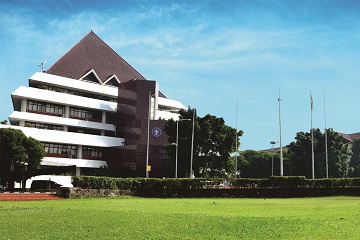
The high rate of worms found in 27 brands of canned fish (imports and national production) released by BPOM should be anticipated by considering many factors with a concrete, balanced and systemic understanding. The handling of this case should not ignore the development of the fisheries sector as one of the centres of national economic growth. Related to this case, on Wednesday (4/4), Faculty of Fisheries and Marine Sciences, Bogor Agricultural University (FPIK-IPB), issued C-Policy Brief or synthesis of thought and argument about Canned Fish. This C-Policy Brief involves the thinking of FPIK-IPB academics, among others: Dr. Etty Riani (Fisheries Toxicology expert), Prof. Dr. Yusli Wardiatno (Aquatic Biota expert), Ir. Agustinus M. Samosir, M.Sc. (Aquatic Ecology expert), Dr. Taryono (Fisheries Socio-Economics expert), Dr. Majariana Krisanti (Aquatic Environment Sciences expert), Dr. Wini Trilaksani (Fish Processing Quality System expert) and Dr. Iriani Setyaningsih (Fish Processing Technology expert).
The synthesis of thought and argument from the academic community of the Faculty of Fisheries and Marine Sciences (FPIK) of IPB related to this case are as follows:
- From the results of BPOM research, parasitic worm is suspected to be found in some canned fish products that use mackerel fish in which worm type of Anisakis simplex is more commonly found according to the literature. simplex occurs in waters with four seasons. It was reported by Tolonen and Karlsbakk (2003). The larvae of Anisakis worm may even eat the organs of herring fish in Norway (Karlsbakk et al, 2000). The final host of A. simplex is a mammal (including humans), while its temporary host is a fish that lives in the waters infected by the worm larvae. Anisakis is a zoonotic endoparasite (nematode) which affects the human health.
- This worm can infect various types of marine fish, especially highly migratory fish which has long food chains, such as sardines, salmon, mackerel tuna, beltfish, white snapper, shark, barramundi, skipjack tuna, etc. Among the genera Anisakis, the most dangerous one is simplex. However, A. simplex occurs only in subtropical countries and has never been found in Indonesia, thus, fishes infected by A. simplex are generally imported fishes. The life cycle of A. simplex is very complex, generally starting from an egg (not containing an embryo) that is taken out simultaneously with the stool of marine mammals. The egg subsequently enters the 1st larval stage (L1) and then develops into the 2nd (L2) and 3rd (L3) larval stages (still in egg). The egg will hatch at the 3rd larval stage. If it is consumed by the 1st intermediary host (commonly marine invertebrates such as crustaceans, copepods, amphipods, jellyfish and small fish), the larvae further penetrate the intestinal wall, entering the body cavity or surrounding tissues. If the 1st intermediary host is preyed by the 2nd intermediary host (fish), the larvae will also penetrate the intestinal wall and be encapsulated (in the form of cyst) in the body cavity or in the surrounding tissues.
- If the fish containing the L3 cyst is eaten by marine mammals, which is its definitive host, then its life cycle is complete. However, if the fish is eaten by human in raw condition, undercooked, smoked, frozen, salted or acidified, then human becomes incidental hosts. The L3 larvae will enter the gastrointestinal tract and undergo several moulting times and develop into L4 stage. After that, it becomes an adult worm which will produce eggs (taken out with faeces in water mammals). simplex can potentially cause anisakiasis when it enters the body of the last host. Both living adult worms and its larvae potentially cause toxicity when the worm is dead.
- In the context of the processing industry of fishery products and the above description, simplex worm is allegedly derived from fish outside tropical waters. Audit of imported fish quality becomes very important in the framework of fish processing industry in Indonesia.
- In the perspective of processing of fishery products, simplex will die with the application of high standards using temperature above 70 DC. In addition, improving the handling standard of raw fish materials becomes very important by using the precautionary approach principle, especially from the supply point of fish catching to the inlet processing. With the application of long commercial sterilization using high temperature and high pressure, as applied to the process of fish canning, this worm should die.* The application of HACCP from sea to table that has become an international standard needs to continue to be improved for processing of both domestic and exported fishery products. This is done to anticipate the existence of allergen from the worm in which several studies showed the possibility of true anaphylactic reaction.
- It is necessary to recheck the mechanism of upstream-downstream integration related to the needs of the fish processing industry, so that the supply of quality raw fish materials from Indonesian waters to the national fish processing industry can be guaranteed.
- This case has the potential to have significant social and economic impacts. Therefore, the mechanism of intermediate policy mitigation needs to be immediately made, so the impacts do not cause the collapse of the national fishery industry and the decline of consumer preferences on fish. Food safety corridors are maintained and fish consumption can be improved.
- Rapid mitigation policy includes the need of upstream-downstream cooperation as an effort to tighten the requirements of fish handling according to imported food safety standards to reduce the survival potential of simplex worm or its larvae growth in raw fish materials for canned fish industry or other processing. This can be done through the tight checking of imported fish before being distributed. In addition, it is also necessary to include free worm requirement in Indonesian National Standard (SNI) for all fishery commodities including canned fish, so that it can be used as a reference for industry.
- Wise socialization and education to the public related to the impact of simplex infection need to be done in order to pacify and maintain people's interest to consume fish. It is also important to undertake efforts to reduce the dependence of imported raw materials for processing industries (cans, pindang). Further research on the possibility of developing A. simplex in tropical waters also has to be conducted.
- Fisheries should be able to become one of Indonesia's economic locomotive, a country that is naturally endowed with large waters including fish resources in it. In this perspective, fishery connectivity from resources owners, resources producers, resources processors and resources consumers should be a pillar that must be managed, so that the fishery sector remains to be a pillar for the nation's current and future economic growth in the corridor of Sustainable Fisheries. (TK)