Professor of IPB Revealed the Potential of Medicine from Indonesia’s Forest
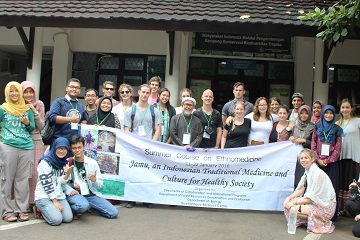
The community around the forest took advantage of a variety of plant and animal species from the forest to maintain the health and the treatment of various diseases. Various research results on the ethnobotany in Indonesia conducted by Professor of Faculty of Forestry (Fahutan), Bogor Agricultural University (IPB), Prof.Dr. Ervizal A.M Zuhud, mentioned that there were 78 spesies of the medicinal plants used by 34 ethnic groups to treat the malaria disease, 133 spesies of the medicinal plants used by 30 ethnic groups to treat the febrile illness, 110 spesies of the medicinal plants used by 30 ethnic groups to treat the disease of the digestive disorder, and 98 spesies of the medicinal plants used by 27 ethnic groups to treat the skin disease.
Generally, it could be seen that 82 percent of the total plant species of the medicines lived in the lowland tropical forest ecosystems at an altitude below a thousand meters above sea level. In general, every type of the forest ecosystem had a specific plant species that characterized each type of the ecosystem.
Prof. Amzu said that in each unit of the national park area it was found various species of the medicinal plants to treat 25 groups of the diseases suffered by the community. Thus, it could be concluded that in every area of the national park which was a tropical rain forest ecosystem was available the raw materials of the medicines for various diseases and had established a system of the local knowledge in the form of the ethno-wanafarma (ethno-forest pharmacy) from generation to generation.
However, at present it was feared that the extinction of most local community knowledge had occurred, because of the uncontrollable global intervention. The potential of the sources of drugs owned by Indonesia was very valuable to support the sovereignty of Indonesia, because today the global community was being aggressively campaigning of the back to nature. The trend was an opportunity for Indonesia to develop the herbs and other traditional medicinal products owned by this nation.
In 2000, the trade values of the herbal remedies, the dietary supplements, the nutraceutical, and other natural products in the world reached 40 billion dollars, and increased in 2002 to become 60 billion dollars. Based on the data, it was suspected that in 2050 the figure could increase to 5 trillion dollars with the increase of 15 percent per year. The increase in the value of this trade was higher when compared with the increase in the value of the modern conventional drug trade which was only 3 percent per year.(KHO/NM)