
A Group of Researchers of IPB and ITB Investigated the Utilization of Nyamplung (Calophyllum inophyllum L.) Extracts
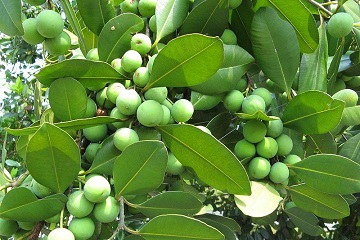
Researcher of Institut Pertanian Bogor (IPB Bogor Agricultural University) and Institut Teknologi Bandung (ITB Bandung Institute of Technology) consisting of Ika Amalia Kartika, A. Febriani Pahan, Ono Suparno and Danu Ariono carried out collaborative work on the extraction of oil and resin nyamplung with solvent. Nyamplung (Calophyllum inophyllum L.) is one of many plants in Indonesia which has big potential to become biodiesel feedstock because of its high seed oil content. This plant is also spread in various parts of the world such as Madagascar, East Africa, South Asia, Southeast Asia, the Pacific Islands, West Indies and the United States. In Indonesia alone nyamplung trees are often found in the Maluku, Papua and Java. In this research, chemical solvent used is hexane and methanol solvent.
The extraction process in this study used methanol and hexane solvent. The nyamplung fruit was obtained from the Special Purpose Forest Area (KHTDK) Carita, Banten. Seed nyamplung which has a high oil content of 39.43 percent is potentially exploited as one source of vegetable oil. In addition, the high carbohydrate and fiber content of 28.56 percent and 45.29 percent make nyamplung shell is very potential to be used as a source of paper adhesive, gypsum board and particle board.
In addition to oil, the resin generated from the extraction process has a high acid value. The standard methods for determining the acid number has been applied for this study. The higher resin acid number is higher than the oil due to phenolic compounds of resin has antioxidant, anti-inflammatory, anti-cancer and anti-microbial properties. Is the reason oil extracted from the seeds is traditionally used topically to treat a wide range of skin injuries from burn, scar and infected wounds to skin diseases such as dermatosis, urticaria and eczema in in Polynesia..
C. inophyllum oil have low iodine values is very potential to be the alternative source of vegetable oil, for raw materials of shampoo, conditioner, lotion cream, ointment and cosmetic products either in liquid, paste or powder. The oil was one of the oldest known to be used for illumination in India and across the Pacific. The pain-relieving properties of C. inophyllum oil has been used traditionally to relieve rheumatism, joint pains and haemorrhage
Some research revealed that the main factors that influence solid-liquid extraction performance are type of solvent, operating temperature of the process, reaction time between solvent and seeds as well as the ratio of solvent to seeds. In fact, it requires less solvent volume and low extraction temperature, 50 degrees Celsius. which was advantageous for the extraction of heat labile compounds.
Further research on the utilization of seed nyamplung as one source of vegetable oil is expected to be implemented. The productivity of C. inophyllum seed is also high. It can reach 20 tonnes seed/hectare, higher than rubber seed productivity (2 tonnes seed/hectare) and Jatropha seed productivity (5 tonnes seed/hectare), palm oil productivity (6 tons seed/hectare). The research was presented in the National Seminar on Innovation for Food Sovereignty held by the Ministry of Research, Technology and Higher Education (Kemenristekdikti) in collaboration with Institute for Research and Community Service Bogor Agricultural University (LPPM IPB) at the end of 2016. (Wied)

