Viral Story: Babysitting Rates of Rp30.000 per Hour, IPB University Expert Discusses the Positive and Negative Impacts
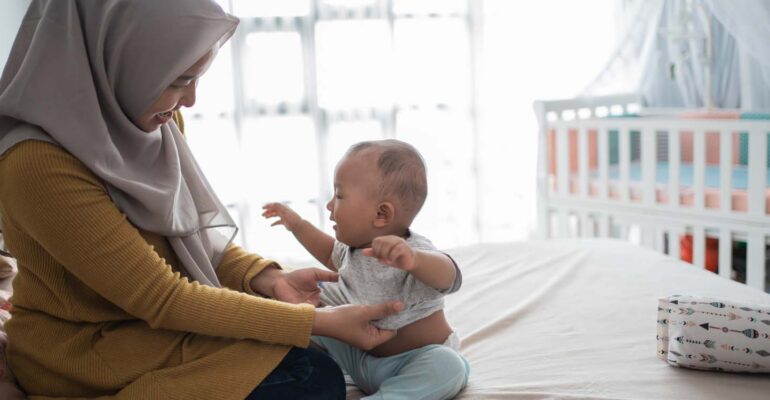
The buzz on social media regarding babysitter rates of Rp30.000 per hour has been addressed by IPB University academic Prof Dwi Hastuti. She emphasized that childcare services are not merely a service but a crucial component in building human resources (HR) from an early age.
The childcare expert reminded that despite the business opportunities in childcare, the quality of children’s physical and psychological development must remain the top priority.
“Childcare is an integral part of the task of developing children’s human resources, beginning with the implementation of early childhood education (PAUD) programs in the 1980s. However, in the current context, the public needs to understand the difference between formally designed early childhood education programs and daily babysitting services,” she explained.
The Difference Between a Caregiver and a Babysitter
This professor at the Faculty of Human Ecology at IPB University explains the difference between a professional childcare provider (tutor or caregiver in a formal setting) and a daily babysitter.
Professional tutors or caregivers in institutional settings must possess professional knowledge as both facilitators and educators, they must have work experience with children, a genuine love for children, and a positive childhood history (free from trauma).
“As for daily babysitters, they generally do not require an educational background (in pedagogy) or professional knowledge. The main requirements are having a natural sense of affection and care, good physical health, and a healthy childhood background,” he explained.
Nevertheless, Prof Dwi emphasized that if a family decides to hire a babysitter, the parents’ role must remain dominant in the caregiving process. Parents need to provide instructions, supervision, and conduct regular monitoring of the caregiver as well as the impact on the child’s growth and development.
“If using a daily babysitter, ensure their physical and mental health, clear identification, and family background. Parents must conduct supervision, monitoring, and regular evaluations,” she advised.
Positive and Negative Impacts
According to her, having a babysitter at home does have a positive impact, namely by opening up opportunities for mothers to work outside the home. She believes this aligns with the government’s vision and mission to promote equal participation of women in the workforce, as well as with the concept of national development.
However, she also cautions about the negative impacts. The existence of childcare businesses, whether in childcare centers (TPA) or through babysitting services, carries risks and has the potential to affect the quality of children’s growth and development.
“Several studies indicate that children cared for in TPA have less optimal growth and development compared to children cared for directly by their families, particularly their mothers, after controlling for socioeconomic status,” explained Prof Dwi.
This is because there are still a number of TPA facilities found to be violating childcare standards, including an inappropriate caregiver to child ratio for the children’s age group, substandard care and supervision, and other issues. Additionally, there are still tutors or facilitators at TPA facilities who lack adequate knowledge and skills in handling children during their developmental stages.
In response to this, Prof Dwi advises families to make the right decisions regarding child-rearing. “The best environment for a child’s growth and development is the home and family,” she emphasized.
Therefore, she encourages families in Indonesia to prioritize home based care with both parents, focusing on building a secure attachment with the child during the first 0–3 years of a child’s life.
“If a secure attachment has been established between the child and the mother, then the child can participate in programs outside the home including daycare, TPA, or other early childhood education programs successfully because the child already has a ‘secure’ attachment to the mother,” she explained. (dh)(IAAS/LAN)