Dean of IPB University’s Faculty of Agriculture Represents Indonesia at APFSD Forum, Presents Circular Urban Agriculture Model
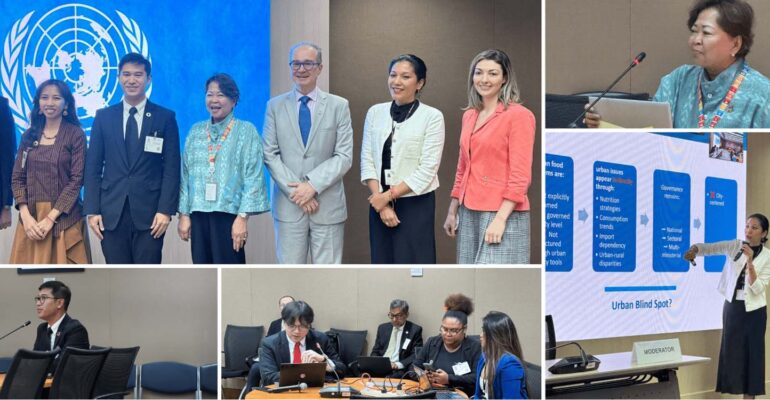
The Dean of the Faculty of Agriculture (Faperta) at IPB University, Prof Suryo Wiyono, represented Indonesia in an international discussion on sustainable food systems at the 2026 Asia-Pacific Forum on Sustainable Development (APFSD) in Bangkok, Thailand. Prof Suryo joined the event online.
At the forum, he presented IPB University’s experience in developing a circular urban agriculture model that has been implemented in Depok City, West Java. The initiative utilizes urban organic waste to produce compost and bio-inputs for local food production.
The presentation was delivered during a session titled “Feeding the Future: Integrated Food Systems for Sustainable Cities and Communities.” The event was organized by the United Nations Food Systems Coordination Hub in collaboration with the Food and Agriculture Organization (FAO), the Stockholm Environment Institute (SEI), Rikolto, and the Milan Urban Food Policy Pact.
According to Prof Suryo, the circular agriculture approach in urban areas not only helps improve food availability but also provides environmental and social benefits for urban communities.
“In addition to improving soil health and food availability, this approach also helps lower urban temperatures through increased vegetation,” he explained.
Community involvement is a crucial component of implementing this model. Community participation in urban agriculture management strengthens social cohesion while creating new income opportunities for residents.
The forum also highlighted the major challenges facing the food system in the Asia and Pacific region, which is the world’s largest urbanized area. Currently, the Asia-Pacific region has more than 2,2 billion urban residents, and this number is projected to increase by 50 percent by 2050.
Maria Antonia Tuazon, Senior Nutrition and Agrifood Systems Specialist at the FAO Regional Office for Asia and the Pacific, noted that food security challenges in the region remain significant.
“About 285 million people still suffer from food shortages, nearly one billion face moderate to severe food insecurity, and approximately 1,2 billion people lack access to a healthy diet,” she said.
Meanwhile, Stefanos Fotiou, Director of the United Nations Food Systems Coordination Hub and Head of the Office of Sustainable Development Goals at the FAO, emphasized the important role cities play in transforming food systems.
“Through policies such as public food procurement, school meal programs, food waste reduction, and strengthening rural-urban linkages, city governments can accelerate the transformation of food systems while supporting the achievement of sustainable development goals,” he said.
Closing the discussion, Raja Asvanon, a researcher at the Stockholm Environment Institute and the session’s moderator, noted that the various experiences shared during the forum demonstrate that cities in the Asia-Pacific region are beginning to develop practical solutions that link food systems with urban development, climate resilience, and public health. (*/Rz) (IAAS/DON)