Agricultural Machinery Cannot Be One Size Fits All, Prof Wawan Hermawan: Design Must Match Land Characteristics and Farmers’ Needs
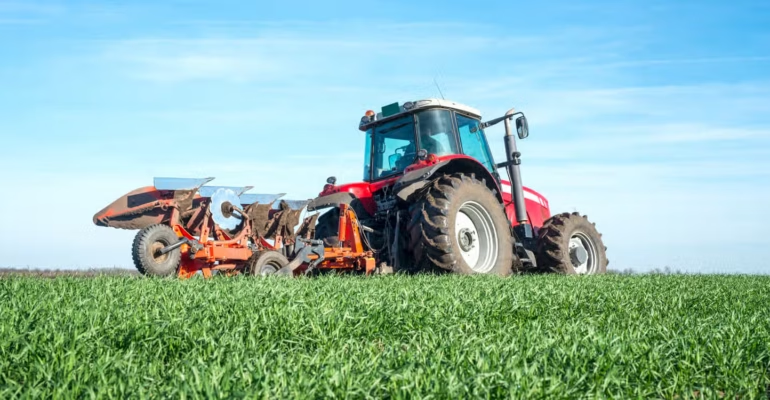
Indonesia’s self reliance in agricultural mechanization cannot rely solely on the availability of machinery; it also requires the ability to design technology that aligns with the characteristics of the land, crops, cultivation environment, and farmers’ needs.
This was stated by Prof Wawan Hermawan, a Full Professor at the Faculty of Engineering and Technology at IPB University, during his keynote address titled “Machine Design as the Heart of Innovation in Indonesia’s Agricultural Mechanization,” delivered on Saturday, (10/24).
According to Prof Wawan, agricultural machinery that works successfully in one location may not necessarily yield the same results in another. The diverse conditions of rice paddy soils in Indonesia, including deep, muddy soils, mean that machine design must be adapted to soil characteristics, farming environments, crops, and even livestock.
“Agricultural progress is not determined solely by the availability of machinery, but by a nation’s ability to design machines that align with the needs of agroecosystems, commodities, socioeconomic conditions, and the characteristics of Indonesian farmers,” he explained.
He explained that the machine design process must begin by studying and measuring the characteristics of the objects to be handled. This data is then used to determine design parameters so that the machine can operate effectively under field conditions.
From Preventing Wheel Slip to Precision Vacuum Seeders
One of the innovations developed is a spring loaded finned wheel designed to improve a tractor’s traction on wet rice paddies. Test results show that this design reduces wheel slip from 20,89 percent to 11,54 percent and increases field efficiency from 68,45 percent to 76,33 percent.
In addition, Prof Wawan developed an integrated, precision machine that combines soil preparation, fertilization, and planting into a single pass. The Four-Row Precision Vacuum Seeder developed for soybeans achieves a working capacity of 0,31 hectares per hour with a field efficiency of 87,9 percent. This system also achieves 100 percent accuracy in placing a single seed at each planting point.
Another innovation is a cattle feed conditioner that combines three functions, namely leveling the feed, turning or mixing the feed, and pneumatically collecting leftover feed. This machine has been tested on cattle farms and has been shown to help distribute feed evenly.
The Need for a New Generation of Innovators
For Prof Wawan, the development of this technology must be accompanied by the preparation of human resources capable of continuing the innovation. Universities play a crucial role in producing experts who are not only capable of operating machinery but also of designing and developing technology tailored to the needs of Indonesian agriculture.
“An academic’s greatest achievement is not merely a successfully built machine prototype, but the emergence of a generation of innovators and design experts who are ready to continue the development of national technology independently and sustainably,” he said.
Moving forward, mechanization efforts will focus on technologies that adapt to soil characteristics, precision farming systems, and the integration of efficient and sustainable mechanization. (Ez) (IAAS/LAN)