
Raw Guava Fruits Processed into Herbal Tea in China, IPB University Expert Explains Their Potential
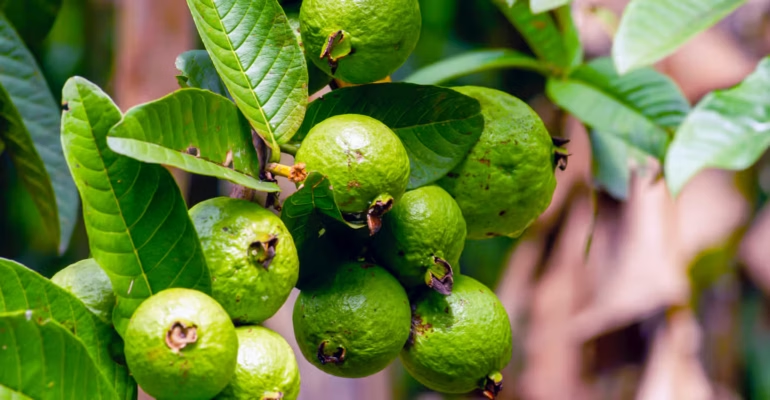
The use of young guava fruits as a tea ingredient in China has drawn attention because they are considered to have potential as a functional beverage.
In response, Prof Sandra Arifin Aziz, a professor at the Faculty of Agriculture, IPB University, explained that young guava fruit is indeed rich in bioactive compounds that have the potential to provide health benefits, although further validation through clinical trials in humans is still needed.
“Tea made from young guava fruit has different characteristics compared to tea made from guava leaves or ripe guava fruit. These differences lie in the content of secondary metabolites, flavor, and physical structure,” she said.
High Bioactive Content
Prof Sandra explained that young guava fruit contains relatively high levels of tannins, gallic acid, ellagic acid, flavonoids, and pectin. At this stage, sugar formation is not yet optimal, so the fruit has a more astringent taste compared to ripe fruit.
“In raw guava fruit, sugar formation is not yet optimal, but the accumulation of plant defense compounds such as phenolics and tannins is at its peak. Processing into tea preserves the stability of these phenolic compounds in the dried matrix,” he said.
Based on phytochemical studies, she explained, an infusion of young guava fruit tea has the potential to help control blood sugar levels by inhibiting carbohydrate breaking enzymes. Additionally, the tannin content supports digestive health, while the phenolic compounds provide high levels of antioxidant and anti inflammatory activity.
However, Prof Sandra cautioned that scientific evidence regarding the benefits of young guava fruit tea in humans remains limited compared to studies on guava leaf extract. Therefore, its health benefits still need to be further investigated through clinical trials.
Opportunities in Indonesia
According to Prof Sandra, the use of young guava fruit to make tea also has potential for development in Indonesia. In guava cultivation, farmers generally practice fruit thinning to improve harvest quality. Until now, the young fruit resulting from this thinning has generally not been utilized optimally.
“The research prospects for this commodity are very promising because they align with the global trend of upcycling food components, that is, utilizing parts of plants that are usually discarded to create high value added products,” she said.
She added that the development of this product still faces challenges, such as standardizing raw materials, controlling browning during processing, and formulating the product so that the astringent taste of the young fruit is more palatable to consumers.
According to him, IPB University has the research capacity to support the development of postharvest technology, efficacy testing, product formulation, and commercialization in collaboration with industry partners. (Fj) (IAAS/HNY)

