IPB University Introduces Fermented Feed Innovation to Strengthen Dairy Farmers’ Self Reliance
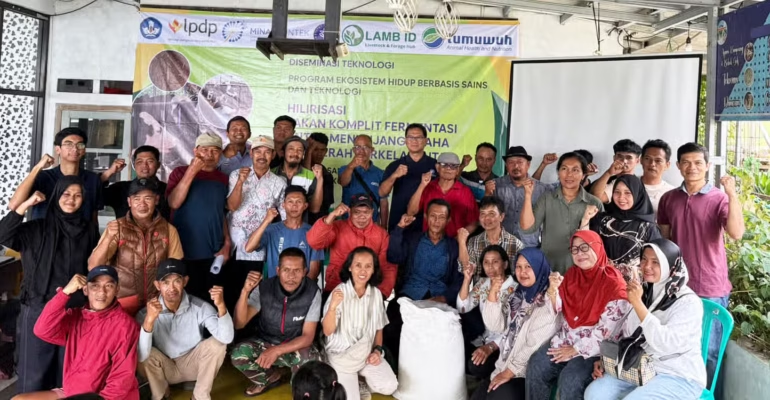
IPB University introduced fermented complete feed technology to 25 dairy farmers at Sanata Milk in Cigugur, Kuningan Regency, West Java, on Sunday (10/11). This innovation is expected to help farmers improve feed quality and efficiency while strengthening their self-reliance in feed supply to support the sustainability of smallholder dairy farming.
The activity is part of the Science and Technology-Based Living Ecosystem Program, funded by the Indonesia Endowment Fund for Education (LPDP) under the Ministry of Finance of the Republic of Indonesia, in collaboration with the Ministry of Higher Education, Science, and Technology (Kemdiktisaintek).
The program encourages the application of research findings through direct testing on farms to assess the effectiveness of the technology, livestock productivity, feed efficiency, and its economic benefits.
Chairman of the IPB University Research Team, Prof Luki Abdullah, presented the application of fermented complete feed technology based on a high-quality forage feed module system. The technology was developed to be easy to implement, efficient, and suited to the needs of dairy farmers.
“This technology integrates various feed ingredients into a more practical and measurable ration, potentially helping farmers maintain consistent nutritional quality and overcome fluctuations in forage availability throughout the year,” Prof Luki explained.
In addition to feed processing, Prof Panca Dewi Manuhara Karti introduced sorghum and indigofera cultivation as sources of high-quality forage. Sorghum has the potential to provide fiber and energy, while indigofera can serve as a source of forage protein.
Meanwhile, Dr Annisa Rosmalia explained the importance of balanced nutrition in feed rations to support the health and productivity of dairy cattle.
The training was attended by nine female and 16 male farmers. Participants also received forage crop seeds and fermented complete feed products to test on their own livestock.
Through direct on farm testing conducted throughout the one-year program, the research team will evaluate the reliability of the feed formulations and products, livestock productivity responses, feed utilization efficiency, and potential economic benefits. The evaluation results are expected to provide a basis for refining the technology before its wider implementation.
The collaboration between IPB University, feed producer partners, and the Saluyu Dairy Farmers Cooperative is expected to accelerate the adoption of university innovations while sustainably improving farmers’ skills in feed and nutrition management. (*/Rz) (IAAS/KAL)