IPB University Researcher Discovers Enzyme to Combat Pathogen Causing Plant Wilt, Officially Granted Patent
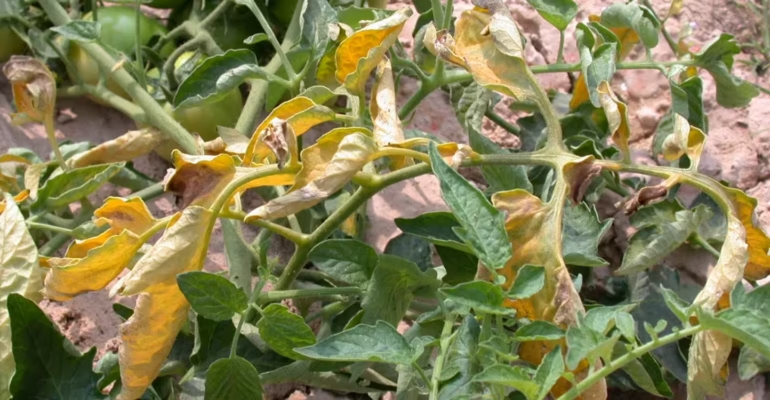
Dr Nisa Rachmania, a lecturer and researcher in the Department of Biology at IPB University, has successfully discovered a natural solution to combat the pathogen that causes plant wilt. She discovered a specific enzyme capable of inhibiting the growth of Fusarium oxysporum, a fungus that damages plants.
“Fusarium oxysporum is a major threat to farmers because it lives in the soil and causes vascular wilt in many food crops, such as bananas, tomatoes, chili peppers, watermelons, sweet potatoes, and even cabbage. Until now, controlling this fungus has often relied on chemicals that are not environmentally friendly,” she explained.
As a solution to this problem, Dr Nisa discovered an enzyme called β-1,3-glucanase. This enzyme works by breaking down the cell walls of Fusarium fungi, preventing them from growing optimally and attacking plants.
“Because it is derived from a natural microorganism, the bacterium Bacillus subtilis W3 15, this enzyme serves as a biofungicide or natural fungicide that is far safer and more environmentally friendly than synthetic chemicals,” she explained.
Until now, Indonesia has relied on imports for similar enzyme products. Dr. Nisa stated, “This discovery opens up significant opportunities for the domestic industry to produce its own biofungicides more cost effectively, utilizing microorganisms native to Indonesia that are already well adapted to our environmental conditions, thereby reducing chemical residues in agricultural products and making them healthier for consumption.”
Currently, the discovery has been patented and is ready for further development so it can be mass produced to help farmers in Indonesia. (dh) (IAAS/LAN)