Staying with Baduy Families, This Is How IPB University Graduate Students Learn About Family Resilience
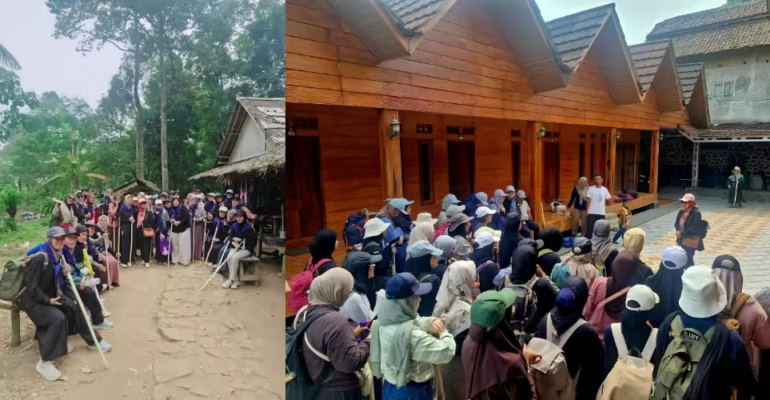
Graduate students at IPB University participated in a Joyful Learning for Adults program by staying directly at the homes of residents in Kampung Baduy Luar, Saturday–Sunday, (9/12–13).
The field based learning activity was directly coordinated by Prof Euis Sunarti, Coordinator of the Family Resilience and Policy (S3), Family Dynamics (S2), and Family Resilience (S2) courses at the Family Science Study Program, FISEMA IPB University. The activity was attended by 36 S2 students and 7 S3 students, accompanied by Dr Defina, Rahmi Damayanti, SSi, MSi, and Muhammad Fikri Maulana, SAg, MPsi.
Each group of students was assigned to different villages, namely Kaduketug 1, Kaduketug Gede, Legojeruk, and Gajeboh. They shared meals and enjoyed time together with the families there.
“During their time in the field, they stayed at the residents’ homes, allowing students to interact with local residents and gain a deeper understanding of the concepts of family resilience and family dynamics among the Baduy community,” said Prof Euis.
In each village, one group interviewed two families on different themes. The themes covered value systems and customary practices as the foundation of Baduy family life; digitalization and technology penetration within families; fertility, family structure, and regeneration of the Baduy community; climate change, disaster risks, and family preparedness; changes in livelihoods and family economic resilience; tourism and the commercialization of culture; parenting, children’s education, and the aspirations of the younger generation; family interactions; as well as health and clean and healthy living practices (PHBS).
“By staying at residents’ homes, students were able to gain a deeper understanding of community life, cook together, and interact with children using both Sundanese and Indonesian,” explained Prof Euis. (*/Rz) (IAAS/ADF)