Vitamins and Antioxidants May Not Necessarily Be Absorbed by the Body, Prof Endang Prangdimurti Studies In Vitro Digestion
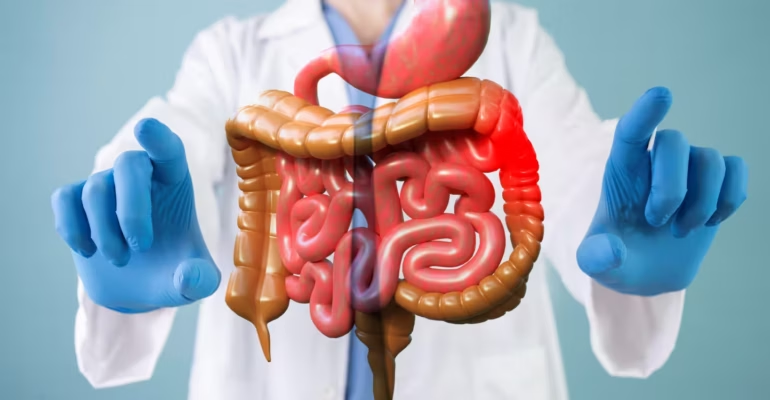
People often judge whether a food is healthy based on its high content of antioxidants, vitamins, or bioactive compounds. However, can the body actually absorb and utilize all of these components?
According to Prof Endang Prangdimurti, a full professor at the Faculty of Agricultural Engineering and Technology at IPB University, the answer is not necessarily yes. “Not all of these compounds can actually be utilized by the body,” she said during a press conference ahead of the IPB University Full Professor Scientific Lecture (7/23).
For this reason, Prof Endang employs in vitro digestion protocols to determine how much of the beneficial substances in food are actually available to the body.
What Is In Vitro Digestion?
Prof Endang explained that in vitro digestion is a simulation of the human digestive process conducted under controlled conditions in a laboratory. The conditions mimic human physiological processes, from the oral phase through the stomach to the small intestine.
“Through this method, researchers can observe changes in bioactive components during the digestive process and determine how much of these components is available for absorption by the body a concept known as bioavailability,” she explained.
During digestion, bioactive components can undergo various changes due to interactions with the food matrix, pH changes, digestive enzyme activity, and interactions with other components. As a result, bioactive compounds can be released from the food matrix, undergo transformation, degrade, or form new complexes with proteins, lipids, and fiber.
Since 2022, Prof Endang’s research has focused more on applying in vitro digestion protocols to assess the potential of functional foods. One of her studies examined the effect of drying on the bioavailability of bioactive components in pulai leaves. The results showed that the flavonoid group, which dominates the pulai leaf decoction, is not entirely stable during the digestion process.
Different findings were observed in whole foods. In some types of vegetables consumed as raw side dishes, the content of phenolic compounds and antioxidant activity actually increased after undergoing the digestive process. This suggests that digestion can help release bioactive compounds that were previously bound within the food matrix.
“In whole foods, the concentration may initially appear lower because the compounds are still bound within the food matrix. After digestion, more of these compounds can be released and become available,” she explained.
This technique is also applied in testing the antidiabetic potential and allergenicity of foods. In green tea extract, for example, the inhibitory activity against carbohydrate digesting enzymes can increase after in vitro digestion. Meanwhile, protein allergenicity testing is a crucial part of food safety assessment, including the development of hypoallergenic foods.
According to Prof Endang, the in vitro digestion technique can serve as a screening step prior to further testing on animals or humans. Moving forward, this approach is expected to support the development of functional foods based on local biological resources that are not only rich in bioactive components but are also proven to be bioavailable and provide health benefits after consumption. (Ez) (IAAS/EPK)