Improving International Collaboration and Student Creativity, IPB University Vocational School Holds The 5th Summer Course
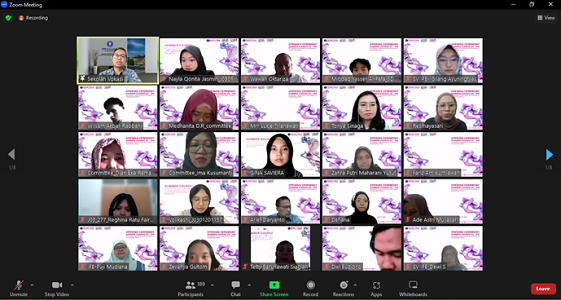
IPB University Vocational School once again organised a series of Summer Courses in 2023 which opened with an International Webinar entitled 'The Inclusivity in Socio-Economic and Environment for Sustainable Agro-Maritime'. The theme was taken with the hope that the participants could understand how the economic system and environmental utilisation in the scope of sustainable agromaritime.
Dr Wawan Oktariza, Vice Dean of IPB University Vocational School for Resources, Cooperation and development said that the world of agribusiness currently has the potential to produce various professions and innovations. Therefore, he hopes that this webinar can increase the level of creativity which also opens up business opportunities for the community and industry.
"Hopefully this summer course can have an extraordinary impact both in terms of economy, agriculture and the environment. This webinar also provides experience, understanding and greater insight into agricultural sustainability. The circular economy system as an effort to realise zero waste from agro-industrial activities is a form of concern for the environment, social and economic," he said.
Prof drh Deni Noviana, Vice Rector of IPB University for Education and Student Affairs in his speech said that agriculture should be guided by a series of circular economy as a form of concern for the environment and a good economic reference for any agricultural products. According to him, this webinar can be very helpful in improving the economy if the output absorbed by the participants is used as a stepping stone in producing zero waste products.
The summer course participants came from various universities in several countries such as Malaysia, the Philippines, Kazakhstan, India and Indonesia. Some of the participating universities include IPB University as the host, Politeknik Ungku Omar, Tarlac Agricultural University, Mariano Marcos State University, Kolej Komuniti Sungai Petani, Suleyman Demiral University and Universitas Negeri Jakarta.
On that occasion, Dr Marie France Que-Jalao from the Regional Field Office (RFO) IX of the Department of Agriculture, Philippines presented the role of regulatory agencies in sustainable livestock production. The main focus of this discussion was the country/regional profile of the Zamboanga peninsula region in the Philippines, Philippine DA RFO and regulatory activities there.
Prof Arief Darjanto, Professor of IPB University from the Faculty of Economics and Management, explained how farmers manage resources and face the struggles they often experience. "In this digital era, farmers must be able to adapt to the times. One of them is collaborating with many parties, such as educational institutions, government and companies," he explained.
Dr Mohamed Elsayed MA Megahed, Fishery Officer (Mariculture) at Food and Agriculture Organization (FAO) explained about harnessing the potential of aquatic farming systems for the poor and vulnerable. For example, reducing poverty and hunger by improving aquaculture fisheries and providing fisheries and aquaculture solutions in developing countries. This is certainly inspiring information and full of knowledge in the world of aquaculture. (*/Rz) (IAAS/RUM)