IPB University Expert Warns of the Risk of Contamination in Sacrificial Meat During Handling and Distribution
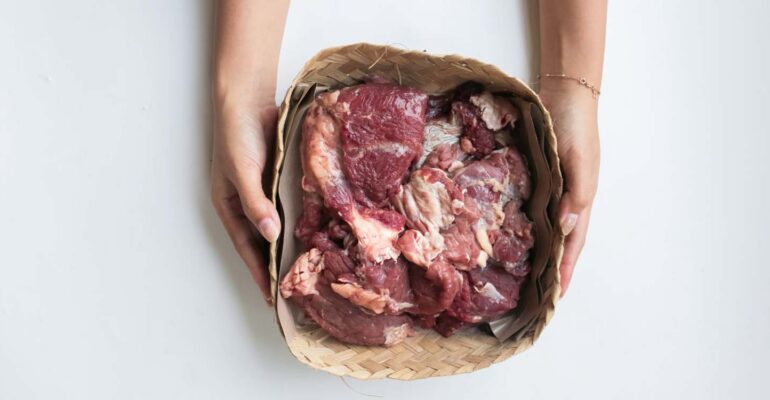
Proper handling of sacrificial animals is essential to ensure that the meat remains safe and fit for consumption until it reaches the public.
Dr Muhamad Baihaqi, a lecturer at the Faculty of Animal Science at IPB University in the Department of Animal Production and Technology (IPTP), explained that the slaughter and processing of sacrificial animals are still often carried out in open spaces with minimal sanitation standards.
“Slaughtering and processing are often carried out in open areas without proper sanitation standards, thereby increasing the risk of microbial contamination,” he said.
According to him, the qurbani committee needs to separate dirty areas such as slaughtering and skinning sites from clean areas designated for cutting and packaging the meat. This measure is considered essential to minimize the potential for microbial contamination of the qurbani meat.
Separate Meat and Offal
Dr Baihaqi also emphasized the importance of proper packaging during the distribution process. He recommended that meat and offal not be mixed in the same package.
“Meat is often mixed with offal during packaging. This poses a high risk because offal can accelerate contamination,” he explained.
He added that meat that has been cut should be distributed immediately to the beneficiaries. For those receiving sacrificial meat, he advised separating the meat from the offal and bones, cleaning it, and then storing it in the freezer if it is not to be cooked immediately.
Pay Attention to the Condition and Distribution of Livestock
In addition to the processing methods, meat quality is also influenced by the condition of the livestock prior to slaughter. Dr Baihaqi recommends the use of appropriate transportation, adequate feeding and watering, and rest periods for the livestock to reduce stress.
He also pointed out that the distribution of sacrificial meat generally does not involve a cooling process. Therefore, the meat must be handled and distributed quickly to prevent spoilage.
Under certain conditions, he continued, a number of qurbani organizations have begun developing innovations to process meat into ready to eat products such as rendang or canned dendeng. However, this method requires greater costs and equipment compared to distributing raw meat.
“Proper handling not only preserves the quality of the meat but is also part of performing the act of worship with full responsibility,” he said. (Fj) (IAAS/EXC)