Eight out of 10 Local Fish in the Surabaya River Are Female, Says IPB University Expert: Endocrine-Disrupting Pollutants Threaten the Population
Prof Alimuddin, a full professor in the Department of Aquaculture at IPB University, explained the phenomenon of the fish population imbalance in the Surabaya River.
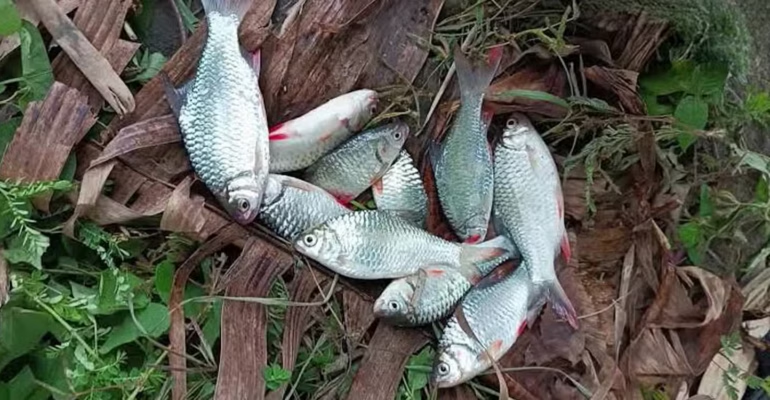
Out of every 10 local fish in the Surabaya River, about eight are female. According to Prof Alimuddin, this imbalance may be triggered by various environmental factors that influence sex determination and differentiation in fish larvae.
Why Are Males Only 20 Percent?
Prof Alimuddin explained that, naturally, the sex ratio of fish is generally close to balanced (50:50). However, conditions in the Surabaya River deviate significantly from that figure.
“Sex determination and differentiation in fish larvae are highly sensitive to changes in water quality and environmental pollution,” he said.
One of the triggers is pollutants and chemical compounds. “Exposure to contaminants containing synthetic or natural estrogens such as residual contraceptive drugs or phytoestrogens can drive massive feminization in fish larvae,” he explained.
In addition, he said, water conditions that tend to be acidic have been shown to result in a more dominant female population. Extreme temperature fluctuations during the larval development stage also influence the direction of sex differentiation.
Threats to Local Species
According to Prof Alimuddin, the impact of this imbalance cannot be taken lightly. “An extreme dominance of the female population has a significant impact on the survival of local species if it persists,” he said. The level of sensitivity varies by species, depending on its mating system.
He outlined three main impacts. First, sperm limitation. With males making up only 20 percent of the population, male fish are at risk of reproductive exhaustion (sperm depletion), leading to a drastic decline in egg fertilization.
Second, a genetic bottleneck. A small number of males leads to inbreeding, which increases the risk of genetic defects and reduces the population’s resistance to disease.
Third, spawning failure and failure to care for offspring. Females that fail to find a mate experience egg reabsorption (atresia). In species that require males to guard the eggs, the absence of males leads to high egg mortality due to predator attacks.
Three Steps Toward Recovery
To restore the Surabaya River ecosystem, Prof Alimuddin recommends strategic steps for the government and environmental managers.
The first step is monitoring and identifying endocrine-disrupting chemicals (EDCs). “We need to specifically identify EDC levels, such as ethinylestradiol, pesticides, and phthalates in water and sediments, as well as map pollution sources through hotspot mapping,” he said.
Second, improvements to regulations and water quality standards. According to him, water quality standards need to be updated to include parameters for endocrine-disrupting chemicals, along with stricter Liquid Waste Discharge Permits (IPLC) and firm penalties for polluting industries.
Third, the modernization of wastewater treatment plant (IPAL) infrastructure and restoration efforts. Advanced wastewater treatment technologies (AOPs, MBR) need to be implemented, and constructed wetlands should be built to serve as biofilters.
“Seedling distribution or restocking activities should be postponed until water quality improves,” he emphasized. (dh) (IAAS/KQA)