IPB University Professor Explains How to Release Turtle Hatchlings in a Way That Adheres to Animal Welfare
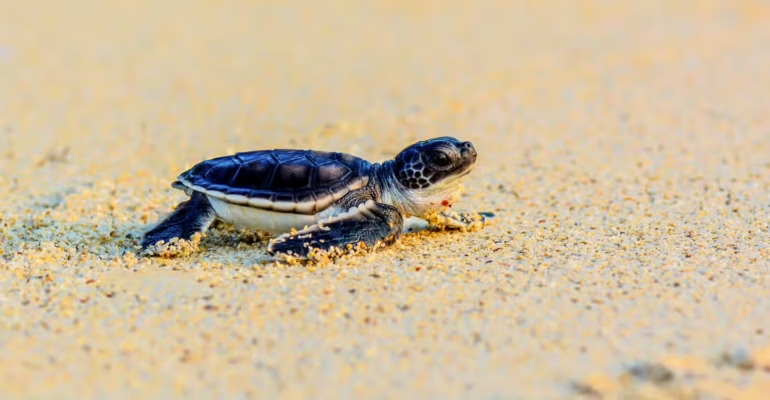
Dr Mohammad Mukhlis Kamal, a professor in the Department of Aquatic Resources Management at IPB University, commented on the practice of releasing turtle hatchlings directly into the ocean.
In a widely circulated video, hatchlings were released from a bucket directly into the ocean waves. This method is considered to bypass the hatchlings’ natural process of traversing the sandy beach before entering the water.
According to Dr Mukhlis, releasing hatchlings in this manner is, in principle, not a problem, as long as it is done with due regard for the hatchlings’ condition and welfare.
“In my opinion, releasing them as the waves crash onto the shore is fine. The dynamic movement of the water caused by the waves isn’t a problem, because the hatchlings’ bodies using their front flippers as ‘paddles’ will handle it,” he said.
However, he acknowledged that this method of release can cause stress to the hatchlings because it isn’t done gradually.
Five Principles of Animal Welfare
Generally, hatchlings are released by placing them on the beach. Naturally, if a hatchling is positioned facing away from the direction of the waves crashing onto the shore, it will turn around and move toward the ocean.
Dr Mukhlis also addressed the many negative comments regarding a video showing hatchlings being poured directly onto the beach, as this was deemed to violate animal welfare principles.
“In the principles of animal welfare, there are five aspects that need to be considered, which are freedom from hunger and thirst, freedom from discomfort, freedom from fear or stress, freedom to express natural behavior, and freedom from injury and pain.
Avoid Physical Contact
According to Dr Mukhlis, what actually requires more attention is avoiding direct contact between hatchlings and human hands during release. He said he gained this insight while releasing sea turtles at Pangumbahan Beach in West Java.
“What really needs the most attention is avoiding direct contact between hatchlings and human hands when releasing them. There may be concerns about bacteria or viruses being transmitted from human hands to the hatchlings,” he said.
Conservation Is More Than Just Releasing into the Wild
Dr Mukhlis stated that current sea turtle breeding activities, in principle, have followed applicable standard operating procedures (SOPs).
Conservation efforts are carried out through the protection of nesting sites and foraging areas, as well as the provision of migration corridors via marine protected areas (MPAs) or aquatic conservation zones.
In addition to habitat protection, conservation is also achieved through human intervention. Sea turtle eggs found at nesting sites are not only protected but can also be transferred to breeding facilities for artificial incubation under specific temperature conditions.
According to Dr Mukhlis, this measure aims to protect the eggs from human poaching and threats from predators, such as pigs, dogs, monitor lizards, and other animals. The eggs are then incubated until they hatch into hatchlings, which are subsequently released back into the ocean.
Don’t Keep Them Too Long
Dr Mukhlis said the ideal time to release the hatchlings is about one week after hatching. “If they are kept too long, there is concern that it will diminish their instinctive ability to ‘return home,’” he said. (dh) (IAAS/WSG)