World Cat Day, IPB Expert Warns of the Dangers of Obesity: Overweight Cats Aren’t Necessarily Healthy
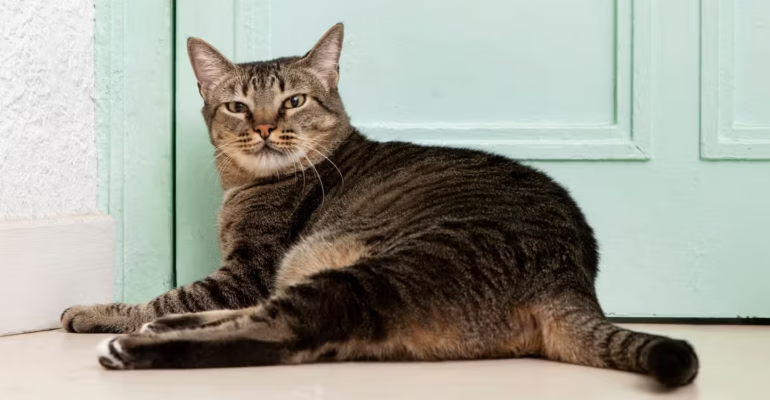
Many owners assume that a plump cat is a healthy cat. Although they may look cute and adorable, this condition can potentially lead to obesity, which can negatively impact the health of your beloved cat.
In observance of International Cat Day on August 8, drh Tetty Barunawati Siagian, MSi, a lecturer in Veterinary Paramedicine at the Vocational School of IPB University, reminds us that obesity in cats is a chronic nutritional disease that needs to be prevented early on.
When Is a Cat Considered Obese?
According to her, obesity occurs when body fat accumulation becomes excessive to the point of compromising a cat’s health and quality of life.
Generally, a cat is considered obese if its weight is more than 20 percent above its ideal body weight. However, assessment isn’t based solely on scale readings but also uses the body condition score (BCS), with the ideal range being a score of 4–5 on a 9-point scale.
“Owners can perform a simple check at home, such as feeling the ribs, observing the waistline from above, and examining the shape of the abdomen from the side. However, the most accurate assessment is still through an examination by a veterinarian using the BCS and muscle condition score,” she explained.
Prone to Various Diseases
drh Tetty added that the high number of overweight pet cats has led some people to consider this condition normal. In reality, fat tissue is an active organ that produces inflammatory substances and hormones capable of disrupting the body’s metabolism.
As a result, obese cats face a higher risk of developing various diseases, such as diabetes mellitus, osteoarthritis, liver disease (hepatic lipidosis), urinary tract disorders, and complications during anesthesia.
Furthermore, obesity makes it harder for cats to move around, hinders their ability to groom themselves, and may lead to a shorter life expectancy compared to cats with an ideal body condition.
To lose weight safely, drh Tetty advises owners to consult with a veterinarian first so that daily energy requirements and ideal weight goals can be accurately calculated.
Portion control, the use of specialized weight-management food, increasing physical activity for 15–30 minutes daily, limiting snacks, and regular weight monitoring are crucial steps that must be consistently followed.
“The diet program must also be supported by all family members. Make sure no one secretly gives the cat extra food, as this is often the cause of failed weight loss efforts in cats,” she said.
She also encouraged owners to change their perspective on pet health. “A healthy cat isn’t the fattest cat, but one with an ideal body condition, who is active, and can live comfortably.
Obesity is a preventable condition through proper diet, adequate physical activity, and regular checkups with a veterinarian,” he concluded. (Lp) (IAAS/WSG)