
Why Are Whales and Dolphins Stranding Themselves More Frequently? An IPB Expert Explains the Causes
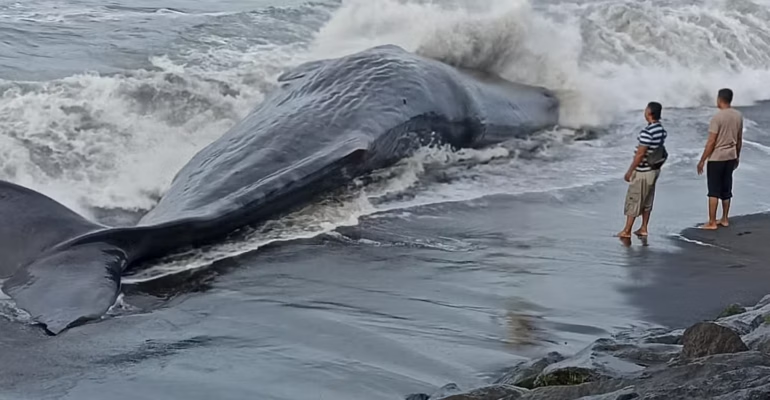
The phenomenon of whales and dolphins stranding themselves more frequently on coastlines has drawn widespread attention.
According to Dr Meutia Ismet, a lecturer in the Department of Marine Science and Technology at IPB University, these incidents are not caused by a single factor, but rather by a combination of various biological aspects, environmental changes, and human activities.
“Research over the past two decades shows that the causes of marine mammal strandings are highly complex. In each case, the contributing factors can vary and influence one another,” she said.
Bacterial and Parasitic Infections
Dr Meutia explained that one cause is biological vulnerability, such as bacterial or parasitic infections. Several studies have found that stranded dolphins have high levels of parasite infestation, which can trigger immune system dysfunction and malnutrition. These conditions are believed to affect the cognitive function and navigational abilities of marine mammals, although a direct link still requires further research.
In addition, bacterial infections such as meningitis, which attacks the brain’s meninges, can also affect or disrupt the sonar system that whales and dolphins use for navigation. Similar disruptions can also be triggered by toxins produced by harmful algal blooms or by the accumulation of heavy metals, which impact the nervous system and cause disorientation.
Climate Change and Migration Routes
According to her, climate change and ocean warming further increase these risks. Rising sea surface temperatures alter the distribution of phytoplankton, krill, and fish, which serve as food sources for marine mammals. As a result, whales and dolphins must change their migration routes to follow their prey.
“Changes in migration routes cause them to expend more energy. When entering unfamiliar waters, the risk of exhaustion, navigational errors, and ultimately stranding also increases,” she explained.
Consequences of Human Activities
On the other hand, human activities such as marine pollution, plastic waste, overfishing (bycatch), and the discharge of organic waste into the water further worsen the condition of marine ecosystems. Organic waste can trigger harmful algal blooms that produce neurotoxins and disrupt the nervous systems of marine mammals.
Dr Meutia added that whales and dolphins are highly intelligent, social mammals. When one individual becomes disoriented or stranded, other members of the pod often follow to offer assistance, which can lead to an increase in the number of stranded individuals.
She urged the public not to panic if they encounter a stranded whale or dolphin. The top priority is to ensure personal safety, immediately report the incident to the appropriate authorities or rescue teams, minimize crowds around the animal, keep its skin wet and protected from the sun’s heat, and ensure its blowhole remains clear of sand while waiting for professional assistance. (Lp) (IAAS/LAN)

