To Prevent Antimicrobial Resistance, IPB University’s SKHB Educates Poultry Farmers on Antibiotic Use and Biosecurity
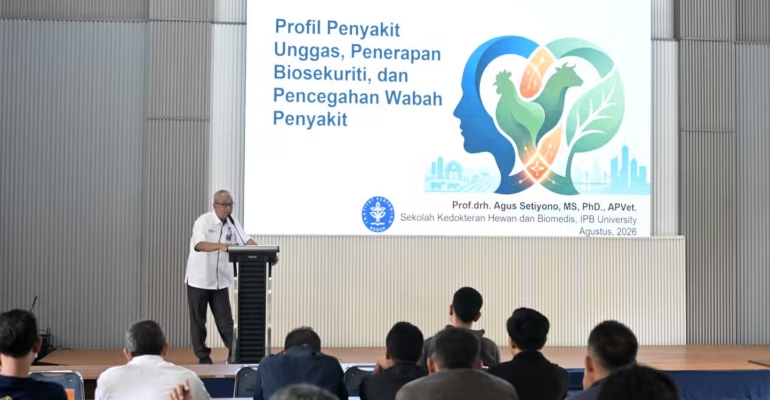
IPB University, through the Global Health Agromaritime-One Health Collaborating Center (GHA-OHCC) at the School of Veterinary Medicine and Biomedical Sciences (SKHB), is encouraging poultry farmers to strengthen the prudent use of antibiotics and the implementation of biosecurity as preventive measures against antimicrobial resistance (AMR) and diseases in poultry farms.
These efforts were carried out through an outreach session for poultry farmers and workers at poultry processing facilities held in the SKHB Transformation Hall on the IPB Dramaga Campus in Bogor (8/18).
The event chair, Dr Etih Sudarnika, stated that this activity served as a collaborative learning space to bridge academic knowledge with farmers’ on the ground experience.
According to her, understanding AMR and biosecurity is crucial because their impacts extend beyond poultry health to affect humans and the environment as well.
She explained that the inappropriate use of antibiotics, including administering them when unnecessary can increase the risk of resistance.
“Antibiotic resistance occurs when germs can no longer be treated because they have become immune to antibiotics. This condition is certainly detrimental because when a disease arises, the medication used may no longer be effective,” said Dr Etih.
Therefore, she noted, disease prevention must be considered an essential part of livestock management, particularly through biosecurity.
In addition to the prudent use of antibiotics, simple daily habits are also considered to play a role in preventing the entry of disease causing agents into livestock farms. Dr Etih cited handwashing and maintaining hygiene as basic practices that farmers can adopt.
Dr drh Hadri Latif, a lecturer at the Department of Animal Health (SKHB) at IPB University, served as a guest speaker. He discussed the importance of raising awareness about the impacts of antibiotic resistance.
He noted that resistance is often not immediately apparent, so the public tends to overlook it. Therefore, educating farmers is crucial to ensure that antibiotic use is not solely focused on treating diseases but also takes long term risks into account.
A presentation on poultry diseases and biosecurity was delivered by Prof drh Agus Setiyono, a full professor at IPB University’s SKHB. He explained that poultry diseases can be caused by various agents, including viruses, bacteria, fungi, and parasites. The impacts may manifest as animal mortality and health issues, but the underlying triggers are often not immediately apparent.
“The diseases we’ve been seeing in poultry are like an iceberg. What we see is mortality or respiratory problems, while the underlying factors lie beneath the surface,” explained Prof Agus.
He also emphasized strategies for preventing outbreaks through the implementation of biosecurity systems tailored to the conditions of each farm. According to him, closed-house systems can help mitigate certain risks compared to open house systems, although this does not mean they are problem free. (dr) (IAAS/HNY)