Melukat Becomes a Trend Among Urban Youth, IPB University Expert Highlights the Shift in Spiritual Meaning
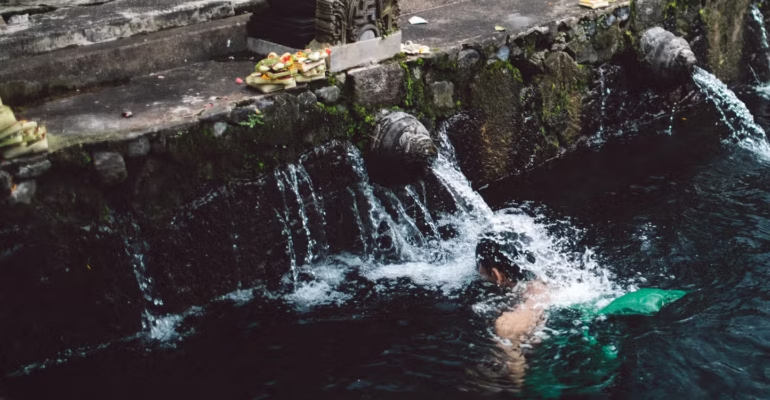
The melukat ritual in Bali is now increasingly popular, especially among the urban younger generation. Alongside the rise of wellness tourism trends, melukat is no longer seen merely as part of Balinese Hindu religious tradition, but has also become a choice for seeking inner peace, releasing life’s pressures, and gaining a more meaningful spiritual experience.
IPB University sociologist Dr Ivanovich Agusta explains that melukat is a ritual of self purification, both sekala and niskala or physical and spiritual, through sanctified water. According to him, a ritual that originally existed within a religious and local cultural context is now undergoing transformation alongside changes in modern society’s lifestyle.
“A ritual that was originally religious in nature has now become a meeting space between the psychological needs of modern society, the dynamics of social media, and the tourism industry,” he said.
He explained that urban communities live at a fast paced, competitive, and highly pressured rhythm. This condition drives the emergence of a need for activities that can bring calm as well as serve as a means of self reflection. If in the past stress relief was synonymous with consumptive activities, such as shopping or entertainment, society is now beginning to shift toward a more holistic approach through wellness tourism.
“Tourists are not only looking for beautiful destinations, but also for experiences that are personal and meaningful. Melukat offers a serene natural atmosphere, symbols of purification, and a narrative about letting go of burdens and starting anew, which aligns with contemporary travelers’ need for a holistic and transformative experience,” he explained.
According to Dr Ivanovich, the appeal of melukat is also inseparable from changes in how the younger generation interprets spirituality. They tend to seek spiritual experiences that are more personal, flexible, and close to nature. Melukat is considered capable of presenting a universal space for reflection without requiring someone to change their beliefs.
Even so, melukat’s popularity is not only driven by the pursuit of inner peace. Social media has also played a major role in expanding this trend.
“There are people who come for self reflection, but there are also those who first learned about melukat through posts by celebrities, influencers, or friends on social media,” he said.
He explained that social media creates social proof that makes melukat increasingly appealing to try. Aesthetic visuals, emotional testimonials, and digital algorithms reinforce the phenomenon of fear of missing out (FOMO), making this ritual part of the list of experiences many people want to have when visiting Bali.
Dr Ivanovich refers to this phenomenon as hyperreality, namely when the visual image of a ritual becomes better known than its sacred meaning. However, he cautions that not everyone who shares their melukat experience on social media can simply be considered as following a trend.
“Someone might learn about melukat through social media, come because of the trend, but then obtain a genuinely reflective experience. Therefore, what matters most is not restricting tourists, but rather ensuring they understand the meaning of the ritual, respect the applicable procedures, and follow the guidance of the indigenous community and religious leaders so that the spiritual and cultural value of melukat is preserved,” he concluded. (AS)(IAAS/STD)