Indonesia’s Seas Are Becoming Increasingly Polluted; IPB University Expert: Reduce Plastic, Strengthen Collaboration to Save the Ecosystem
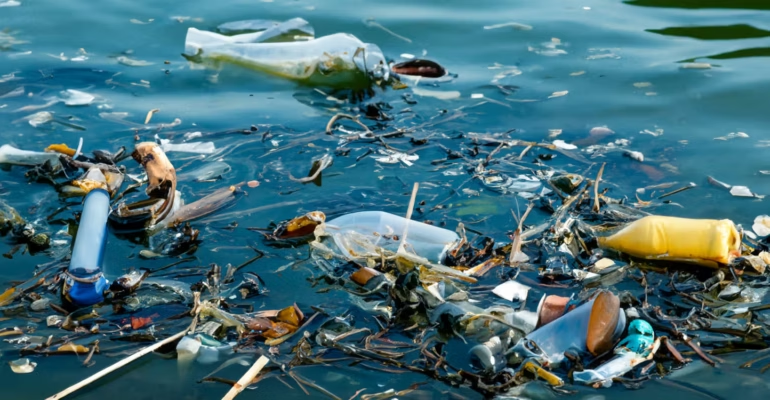
Prof Etty Riani, a professor at the Faculty of Fisheries and Marine Sciences at IPB University, said that marine pollution in Indonesia is now becoming increasingly alarming. It is no longer confined to urban areas, it has spread to coastal regions far from centers of human activity.
“Most marine pollution stems from land based activities, such as domestic, industrial, and agricultural waste, as well as trash carried by rivers into the ocean,” explained the expert in environmental pollution and ecotoxicology.
In addition to degrading water quality, pollution also causes damage to critical ecosystems such as mangroves, seagrass beds, and coral reefs which serve as habitats for various marine species.
Prof Etty noted that plastic waste remains the largest contributor to marine pollution in Indonesia. Based on various studies in coastal areas, the most commonly found types of waste include single use food and beverage packaging, plastic bags, bottles, straws, styrofoam, as well as plastic nets and ropes.
According to her, the plastic problem is becoming increasingly serious because plastic is difficult to break down and can persist in the environment for hundreds of years. Over time, plastic breaks down into microplastics and even nanoplastics, which have now been found in seawater, sediments, fish, shellfish, shrimp, sea cucumbers, and even salt. This situation poses a potential threat to both ecosystems and human health through the food chain.
She emphasized that the public plays a major role in preventing waste from ending up in the ocean. Simple steps that can be taken include reducing the use of single use plastics, bringing your own shopping bags and water bottles, sorting waste, turning organic waste into compost, not littering in rivers or on beaches, and participating in river and beach cleanup activities. Educating families and the surrounding community is also crucial so that waste management becomes part of daily life.
Furthermore, Prof Etty warned that if marine pollution is allowed to continue for the next 10 to 20 years, the impacts will be far-reaching. Fisheries productivity is expected to decline due to the destruction of fish habitats, while the accumulation of pollutants and microplastics in marine life could threaten food security and public health.
From an economic perspective, fishermen risk experiencing a decline in catch yields and the quality of fishery products, while the marine tourism sector may also be affected by the deterioration of coastal environmental quality.
“Marine pollution must be addressed in an integrated manner through strengthened law enforcement, the implementation of a circular economy, and collaboration among the government, the business sector, academia, communities, and the public. In this way, we can pass on a healthy and sustainable marine ecosystem to future generations,” she concluded. (Lp) (IAAS/LAN)