IPB University Expert: Dominance of Plecos in Ciliwung River Indicates a “Sick” River Due to Pollution
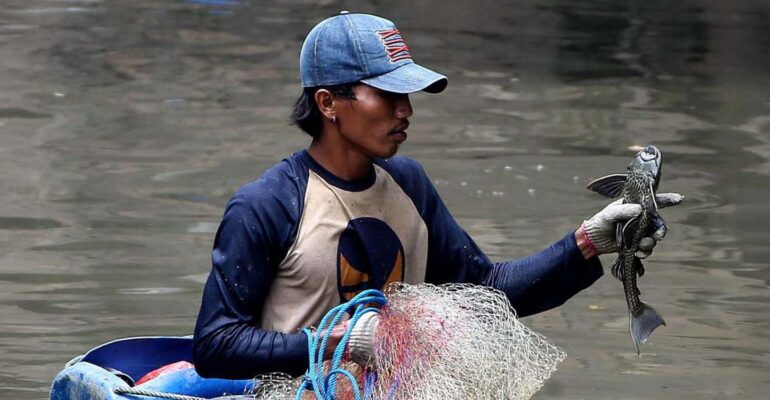
Professor from the Faculty of Fisheries and Marine Sciences at IPB University, Prof Yusli Wardiatno, highlighted the critical condition of the Ciliwung River, now dominated by suckerfish (pleco) populations. According to him, the abundance of plecos in the Ciliwung is not a sign of a rich ecosystem but rather a strong indication that the river is “sick.”
“Currently, plecos are the easiest species to find in the Ciliwung, as if the river ‘belongs to them.’ This dominance shows a fundamental change in the river’s condition, leading to the loss of diversity of local freshwater fish that were previously known to be high in Java’s rivers,” he stated.
Prof Yusli explained that the decline of local fish is not solely due to competition but because the river environment has drastically changed. The Ciliwung has long borne the burden of domestic, industrial waste, and urban runoff. Various studies show the presence of heavy metals such as lead, cadmium, and mercury in the water and sediments.
Unlike local fish not adapted to polluted environments, plecos are “advantaged.” Plecos can survive in low-oxygen conditions, turbid water, and environments uninhabitable for other species, making them dominant survivors in the waters.
Amid this dominance, ideas have emerged to catch as many plecos as possible and utilize them as an economic resource, which is seen as reasonable to control the population.
However, Prof Yusli warned that such utilization must be done with extreme caution. Fish living in polluted waters can accumulate heavy metals in their tissues, with some findings showing levels exceeding safe consumption thresholds.
“Health risks remain even if the fish are processed into non-food products like feed, fertilizer, or industrial materials. Heavy metals could re-enter the food chain or be absorbed by plants through fertilizer if the processing is not thoroughly clean,” he explained.
Therefore, he emphasized that utilization must be accompanied by strict oversight, from capture locations and processing methods to ensuring the safety of the final products.
Furthermore, Prof Yusli stressed that the root problem of invasive species like plecos often stems from pet fish being released into the wild. This action triggers ecological issues that are difficult to reverse because invasive species can proliferate uncontrollably.
“Controlling plecos through mass capture and economic utilization is only a temporary solution. The issue of pleco dominance cannot be fully addressed by that alone; it must be accompanied by river quality improvement and changes in public behavior, especially awareness not to release invasive species into the wild,” he concluded. (dh) (IAAS/PRO)