Indonesia’s Functional Food Breakthrough: Agriculture Minister Amran Eyes IPB University’s Kasea Seaweed “Instant Rice,” a New Solution for Diabetes Management
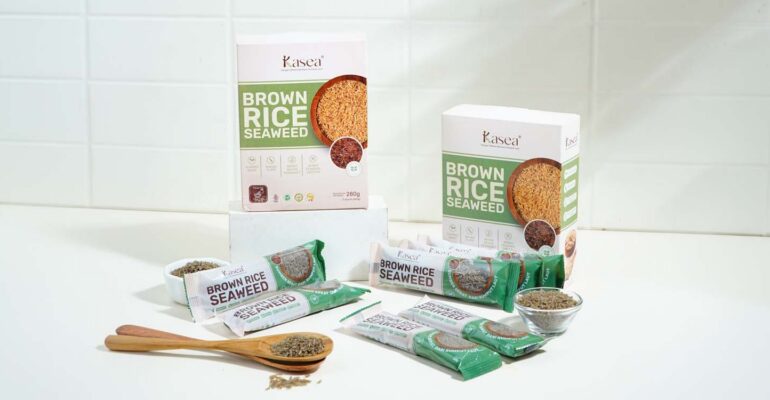
For most Indonesians, rice remains a staple food that is hard to replace. However, growing health awareness has spurred the emergence of food innovations that are not only filling but also provide functional benefits. One such breakthrough is Kasea Seaweed, a seaweed based food product developed by IPB University that recently caught the attention of Indonesia’s Minister of Agriculture, Andi Amran Sulaiman.
Kasea Seaweed is an instant rice substitute made from a blend of rice, corn, and cassava flours enriched with seaweed flour. The product is processed using extrusion technology, resulting in grains resembling rice with physical and sensory characteristics acceptable to consumers, while also offering health benefits.
This innovation was developed by Prof Sri Purwaningsih, Professor of Aquatic Product Technology at the Faculty of Fisheries and Marine Sciences (FPIK). She explained, “The primary focus of Kasea Seaweed’s development is as a functional food with the potential to aid in diabetes management.”
Several studies have shown that consuming this seaweed rice helps significantly lower fasting blood glucose levels and improve insulin sensitivity. The physiological mechanism underlying these benefits is believed to be related to its high dietary fiber content, which plays a role in slowing gastric emptying and glucose absorption in the intestines. As a result, postprandial blood sugar spikes can be controlled.
Additionally, Prof Sri noted that seaweed, as the primary ingredient, is rich in bioactive compounds such as carotenoids, phenolics, polyphenols, vitamins, and minerals, and possesses strong antioxidant activity. “This combination of components makes Kasea Seaweed not only highly nutritious but also potentially protective against oxidative stress,” she explained.
In terms of consumer acceptance, the product has received a positive response. A number of users reported a longer lasting feeling of fullness, a softer texture, and a different eating experience compared to conventional rice. This demonstrates that healthy food innovations can still meet the sensory preferences of the public.
After undergoing research and development, Kasea Seaweed has now entered the commercialization phase as a rice substitute product available on the market both online and offline. This initiative reflects IPB University’s commitment to promoting the practical application of research findings to generate tangible benefits for the community.
With its potential as a functional food, Kasea Seaweed is expected to serve as an alternative solution in supporting healthy eating habits, particularly for individuals at risk of or living with diabetes. This product is also suitable for dietary programs, safe to consume as it is gluten free, and suitable for vegans, while simultaneously contributing to national food diversification based on local resources. (dh) (FHD/IAAS)