IPB University Ecological Geneticist: Like Humans, Chimpanzees Can Also Engage in “Civil War”
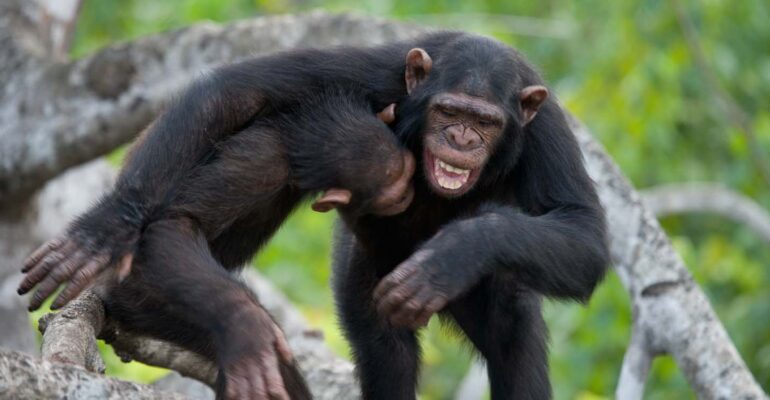
Social conflict, long considered unique to humans, also occurs in the animal kingdom. In Kibale National Park, Uganda, “civil war” between chimpanzee groups demonstrates how social dynamics can lead to a drastic decline in population.
IPB University Ecological Geneticist Prof Ronny Rachman Noor noted that chimpanzees are known as the animals closest to humans, both genetically and behaviorally.
“Research shows that humans share approximately 98–99% of their DNA with chimpanzees, making them genetically closer than gorillas. Like humans, chimpanzees also exhibit complex social behaviors such as empathy, cooperation, and even organized conflicts resembling war,” he said.
Intergroup conflicts among chimpanzees in Kibale serve as one of the most dramatic examples. Prof Ronny explained that a study by The University of Texas published in the journal Science documented the origins of the conflict.
The conflict was triggered by the breakup of the large Ngogo community—which previously numbered around 200 individuals—into two hostile factions, the Western and Central groups. The struggle for territory and resources, as well as the loss of an older male who served as a social stabilizer, exacerbated the situation.
“Researchers refer to these organized attacks by the Western group as collective raids. Chimpanzees collaborate, devise strategies, and carry out systematic killings against other groups,” he said.
As a result, many individuals from the Central group—including females and young—became victims. These “Collective Raids” caused a significant population decline and destroyed the social structure of the remaining group.
“The loss of group members leads to the collapse of social structures, weakens cooperation, and reduces the group’s ability to survive. Consequently, drastically reduced populations narrow genetic diversity, increase vulnerability to disease, and diminish adaptability to environmental changes,” explained Prof Ronny.
According to him, this phenomenon indicates that threats to chimpanzees stem not only from human activities such as deforestation and poaching, but also from the internal dynamics of their own groups. Protecting chimpanzees is not just about preserving forests, but also about understanding their social dynamics.
To address these impacts, Prof Ronny outlined a more comprehensive conservation strategy. Measures that can be taken include long-term social monitoring, habitat and resource protection, and ecological interventions by maintaining the presence of adult individuals—especially older males—as social stabilizers.
“Habitat and resource protection must be maintained, including ensuring sufficient food availability and space so that conflicts in the area do not escalate further,” he said.
Additionally, global and local collaboration is crucial, including the integration of international policies and community education to support chimpanzee conservation as part of the world’s heritage.
“Chimpanzee warfare in Kibale is not merely a biological phenomenon but also reflects social complexities similar to those of humans. To prevent the population from declining drastically, conservation efforts must combine social monitoring, habitat protection, and ecological interventions to maintain community balance,” concluded Prof Ronny. (*/dh/Rz) (IAAS/HNF)