
IPB Analysed Medicines to Control Diarrhea in Cattle
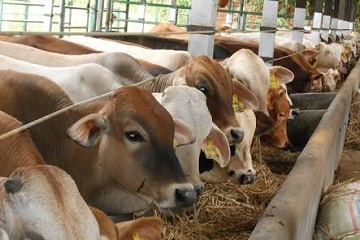
Bovine viral diarrhea virus (BVDV) is an important viral disease, which a ubiquitous pathogen of cattle with worldwide economic importance and due to its misdiagnose with other viruses. One of the obstacles experienced by cattle ranchers is the clinical symptoms of diarrhea. Diarrhea in an organism can cause the organism to lose some of its body fluids, Lose water and salt from their bodies, animals become weak and thin, loss of appetite, and lose watery feaces contains mucous and sometimes blood comes along with feaces dehydrate and can even cause death. In general, these infections are often acquired from food or water that has been contaminated by bacteria, parasites and viruses. Therefore, it takes research on controlling diarrhea using antibody material that can inhibit the growth of bacteria and viruses in the form of immunoglobulin.
Seven researchers are Anita Esfandiari, Sus Derthi Widhyari, Bayu Febram, Retno Wulansari, Leni Maylina, and Arief Purwo Mihardi of the Department of Clinics, Reproduction and Pathology; and Sri Murtini of the Department of Animal Diseases and Veterinary Public Health of the Faculty of Veterinary Medicine of Bogor Agricultural University (IPB) implemented the research program on diarrhea in cattle.
Anita Esfandiari explained that, Immunoglobulin is a protein produced by plasma cells and lymphocytes that play an important role in the immune system of living things. Immunoglobulin is divided into Immunoglobulin A, Immunoglobulin G, Immunoglobulin M, Immunoglobulin D, and Immunoglobulin E. The type of Immunoglobulin used in this study was Immunoglobulin G (IgG). Immunoglobulin G (IgG) is an antibody that plays a very important role in fighting viral and bacterial infections in the body.
However, there is constraint in the application of immunoglobulin G (IgG) administered through the feed, because IgG is very sensitive to the digestive tract environment. Immunoglobulin G that enters the digestive tract will be easily damaged because it is in direct contact with the enzymes found in the digestive tract.
The sensitivity of IgG requires treatment by giving a microencapsulation layer as it is expected to protect IgG colostrum for not easily damaged by environmental influences contained in the digestive tract. So according to Anita, further research related to the provision of a layer of microencapsulation of anti-ETEC colostrum (enterotoxigenic Escherichia coli) is really required.
The objectives of this study include the preparation and evaluation of chitosan-alginate-coated microcapsules, containing IgG anti ETEC derived from bovine colostrum for the passive immunotherapy of diarrhea caused by colibacosis. Pregnant cows will be injected subcutaneously with Escherichia coli vaccine, "said Anita.
Microcapsulation is made with a chitosan-alginate coating material using an extraction method. Anita explained that, chitin-alginate microcapsules can protect IgG effected by digestive tract enzymes, so it is possible to be used as an IgG carrier for feeding applications properly. (Wied)

