
Agronomic Students of IPB Tried to Open Creative Insight on Rare Fruits for Their Friends
Have you ever tasted red salak (Salacca affinis)? Or red mangosteen? Or Menteng fruit (Baccaurea javanica)? These are rare fruits of Indonesia. The word rare is closely related to exotic; it means most of rare fruits found in regions with tropical climates. The definition of rare fruits is quite hard to define. It depends on where you are currently living. Some fruits may be rare for some countries but not in yours and the vice versa. However, speaking of rare fruits in general is probably fruits that are not commonly found in all countries. Indonesia's biodiversity is very abundant. Occupying only 1.3% of the world's land surface, Indonesia is one of the world's richest nations in terms of its biodiversity. Diversity has become so important and significant in this century. Diversity is a heritage blessing that can be a potential to bring a better future for Indonesia, not a weakness. We must all realize the unique heritage of biodiversity that are entrusted to us, young generation of Indonesian.
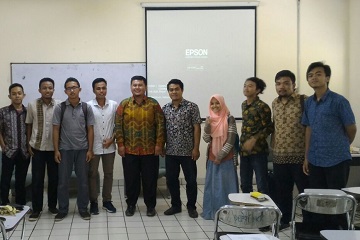
To respond such issue, the Association of Students of Agronomy (Himagron) of Bogor Agricultural University (IPB) invited Dr. Deden Derajat Matra, a researcher from IPB and Aziz Natawijaya from Mekar Sari, as resource persons on Horticulture on The Talkshow, carried out in IPB Campus, Dramaga, 21 April 2018. The theme of the program was “Dinamika Riset dan Pengembangan dalam Menjawab Tantangan Bisnis Buah Nusantara (the Dynamics of Research and Development in Responding the Challenges of the Nusantara Fruit Business)”.
Chairman of the Organizing Committee, Muhammad Hanif Abdul Aziz, said that the implementation of “the Talkshow” was expected to generate creative ideas from students in the development of the Indonesian fruits. Agriculture in Indonesia started as a means to grow and provide food. Rice, coconut, sugar palm, taro, tubers, shallots and tropical fruits were among the earliest produce being cultivated in the archipelago.
Dr. Deden Derajat in his presentation explained that agriculture is not merely talking on rice fields and hoes. But also related to fruits of various kinds and can be developed again in accordance with technological developments. Today, an uncountable variety fruits has been bred by professionals. The research programs are also for the welfare of farmers.
"One example is the development of genetic fruit to get new varieties. Old-fashioned breeding techniques are bearing more fruit than genetic engineering in developing hyper-efficient plants. New fruit varieties are needed to satisfy consumers, and the industry is facing new challenges in order to respond to these demands. Genetic development of fruit in Indonesia is not familiar, dissimilar to the Indonesian situation in the other countries genetically modified fruit have been developed massively,” he said.
Meanwhile Aziz explained that the fruits cultivated in Mekar Sari are mostly rare fruits. Like the durians of red skin (Durian Lahong), bool guava fruit (Syzygium malaccense), buni in English bacca or berry (Antidema thwaitesianum), nangkadak (Artocarpus heterophyllus), sweet mango, kepel or burahol (Stelechocarpus burahol), and many more. With the plant types that amounted to ± 78 family, 400 species & varieties 1438, Mekarsari garden of tropical fruit in Indonesia is the most comprehensive in the world for tropical fruits.
"Indonesia is very rich in fruits. The climate of Indonesia is well-suited for growing various sorts of (tropical) fruit. These fruits can’t be found in sub-tropical countries. These countries only have very few fruit varieties, "said Aziz. (Wied)

