A Group of Researchers of IPB Utilized Statistics to Control Brown Planthopper Attacks
A group of researchers of the Department of Statistics of the Faculty of Mathematics and Natural Sciences of Bogor Agricultural University (FMIPA IPB) implemented the study program on the application of Generalized Space Time Autoregressive Integrated Moving Average (GSTARIMA) to the extent of relative attacks of brown planthopper in rice plants with the best spatial weighting matrix. The group consisted of Fahdlul Mubarak, I Made Sumertajaya and Muhammad Nur Aidi.
Sumertajaya expressed that rice is a major staple food for Indonesians, especially in some provinces such as Nanggro Aceh Darussalam Province, North Sumatera Province, West Sumatera Province, Riau Province, Jambi Province, Bengkulu Province and Lampung Province. Rice production in Indonesian history is linked to the development of iron tools and the domestication of Wild Asian Water Buffalo as water buffalo for cultivation of fields and manure for fertiliser. Rice production requires exposure to the sun. Once covered in dense forest, much of the Indonesian landscape has been gradually cleared for permanent fields and settlements as rice cultivation developed over the last fifteen hundred years. These rice production sometimes experience a decrease in production both in terms of quality and quantity.
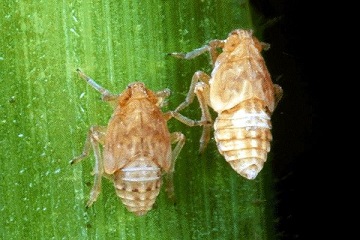
He said one of the factors that happen is the attack of brown planthopper stem. The brown planthopper (BPH), Nilaparvata lugens (Stål) (Hemiptera: Delphacidae) is a planthopper species that feeds on rice plants (Oryza sativa L.). BPH are among the most important pests of rice, and rice is the major staple crop for about half the world's population. BPH infest the rice crop at all stages of plant growth. As a result of feeding by both nymphs and adults at the base of the tillers, plants turn yellow and dry up rapidly. The BPH feeds directly on the growing plant, reducing its yield potential. BPH damage and grassy stunt infection resulted in great yield losses in Indonesia in recent years. the total amount of grain lost to the BPH and the associated grassy stunt disease would undoubtedly be more than US$100 million.
"The population dynamics of BPH, can be modeled and predicted using statistics approach. BPH population dynamics are influenced by three components, of which the source of food, the natural enemies, and the biotic factors such as weather and topography. Basically, BPH population dynamics models can be used as a signal occurrence identification of factors that affect population fluctuations and cycles, the reconstruction of population distribution, and the empirical test of the natural population dynamics phenomenon Forecasting diseases and insect pests are forecast on long- and short-term bases of the time of the insect’s appearance and its numbers in the coming rice season. Forcasting of BPH attack on rice plants is one of the agricultural protection systems," he said. He explains, forecasting the attack area of BPH also need to be done simultaneously to several locations. This forecast aims to predict the extent of the BPH attack for the time to come. The government can also make these forecasting results as a consideration to determine policies and strategies to deal with the attack of BPH in the future.
"One statistical approach for modeling and forecasting multiple location data and time simultaneously is the Generalized Space Time Autoregressive Integrated Moving Average (GSTARIMA). The technology provides the geographic information about the position prediction endemic regions 4 major pest species, route of migration and early warning of plant pest attack. This is a model that combines time and location factors in time series data of multiple variables, "he said.
The results showed that the relative attacks of brown planthopper stems on rice plants for Aceh Province, North Sumatera Province, West Sumatera Province, Riau Province, Jambi Province, Bengkulu Province, South Sumatera Province and Lampung Province simultaneously were GSTARIMA (1.0.0 ) with a second spatial order. The Forecasted attacks of BPH for January – December 2017 in eight provinces is relatively increased. (Wied)