
Poaching and Genetic Erosion Threaten Indonesia’s Jungle Fowl, IPB University Expert Proposes Licensed Breeding Programs
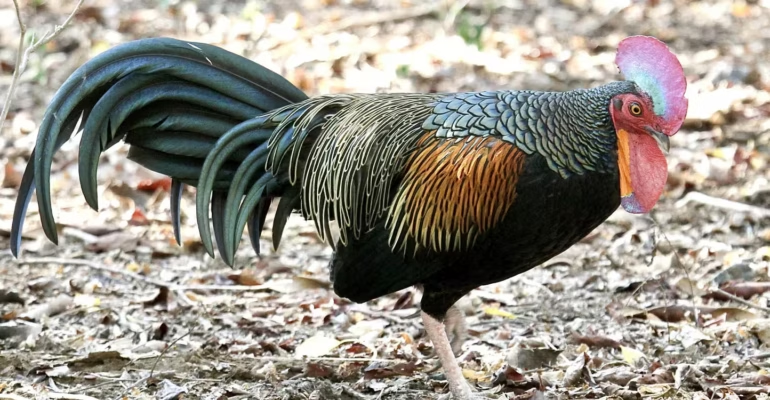
Indonesia’s jungle fowl population faces pressures ranging from habitat loss and poaching to crossbreeding with other chicken breeds. These conditions not only threaten the wild population but also risk eroding the genetic purity of the jungle fowl as part of Indonesia’s rich biodiversity.
Dr Nyoto Santoso, a professor and Chair of the Department of Forest Resource Conservation and Ecotourism (KSHE) at IPB University, explained that jungle fowl populations are generally declining due to shrinking habitats.
“The conversion of forest areas into plantations, agricultural land, mining sites, or other uses is putting pressure on the jungle fowl’s living space,” he said.
Nevertheless, Dr Nyoto continued, jungle fowl have the ability to adapt to environments adjacent to human activities. These birds can still be found in plantation areas as long as there are open spaces or forested areas that can serve as habitats.
“If humans do not disturb them, even in oil palm plantations jungle fowl can still thrive because there is an abundance of food, such as insects and seeds,” he explained.
Dr Nyoto believes that the increasingly serious threat actually stems from poaching. Male jungle fowl, which are responsive to the crowing of other jungle fowl, are often used by poachers to lure and capture them. High demand from hobbyists further intensifies this pressure.
Jungle fowl are sought after not for consumption, but as pets and breeding stock for crossbreeding with native village chickens to produce “bekisar” chickens. Crossbreeding is also conducted with Kate chickens, Ketawa chickens, and other chicken breeds.
“If this continues unchecked, it could lead to genetic erosion and make it increasingly difficult to preserve the purity of native jungle fowl,” he emphasized.
Two Native Indonesian Jungle Fowl Species
Indonesia has two native jungle fowl species: the red jungle fowl (Gallus gallus) and the green jungle fowl (Gallus varius). The red jungle fowl is found in Sumatra, Java, Kalimantan, and Sulawesi, while the green jungle fowl is found in Java, Bali, West Nusa Tenggara (NTB), and East Nusa Tenggara (NTT).
Dr Nyoto stated that maintaining purebred lines is a crucial part of conserving Indonesia’s jungle fowl. Breeding programs can be one solution, but they must be conducted officially while taking into account the genetic origins of the parent birds.
“The government, through the Natural Resources and Ecosystem Conservation Agency (KSDAE), needs to encourage licensed breeding programs and provide suitable parent birds for both the public and universities. Universities play a vital role in research on breeding, behavior, adaptation, and the care of jungle fowl in captivity,” he said.
“What is particularly important is their adaptation to their environment and how they can thrive in captivity. The results of captive breeding can also be directed toward increasing the population and supporting reintroduction efforts,” added Dr Nyoto.
Ultimately, the conservation of jungle fowl requires a combined effort involving habitat protection, poaching control, licensed breeding, and the preservation of genetic purity. (Ez) (IAAS/LAN)

