IPB University Researcher: Artificial Evolution Is No Longer Just Science Fiction
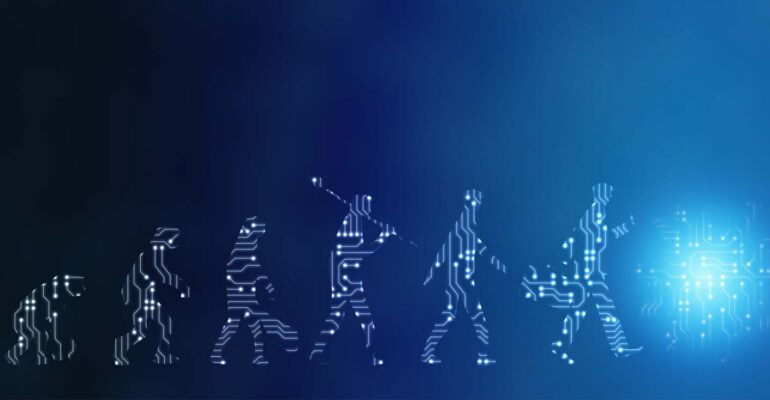
Artificial evolution, which once existed only in science fiction stories, is now becoming a reality. Evolution is no longer limited to biological living organisms, rather, it can be engineered through computers, robots, or synthetic organisms. What exactly is artificial evolution?
Prof Ronny Rachman Noor, an Ecological Geneticist at IPB University, explains that artificial evolution is a process in which computer algorithms, robots, or artificial systems mimic biological evolutionary mechanisms such as natural selection, mutation, and adaptation.
“For example, genetic algorithms in the fields of computational and evolutionary robotics enable robots to learn how to move. Furthermore, digital ecosystem simulations developed to build systems capable of adapting, evaluating optimal solutions, or even creating artificial life forms all demonstrate just how fascinating and innovative this field is,” explained Prof Ronny.
This concept is not new. Artificial evolution has long served as inspiration in the world of science fiction, from Mary Shelley’s Frankenstein to Isaac Asimov’s I, Robot. According to Prof Ronny, these works use the idea of artificial evolution to explore the boundaries between humans and technological creations.
“Artificial evolution in science fiction often depicts the creation or simulation of evolution that transcends the limits of natural biological evolution. This is frequently used as a metaphor to discuss the future of humanity, technology, and ethics,” he said.
Today, this concept has evolved into real world applications across various fields. Artificial evolution is used in optimization algorithms, drug design, and the development of adaptive systems. Evolutionary simulations help scientists gain a deeper understanding of genetic and ecological dynamics. This field is fascinating because it combines biology, computer science, and philosophy, thereby enriching scientific knowledge.
In biotechnology, directed evolution techniques are utilized to produce new enzymes that are more efficient in the biofuel and pharmaceutical industries. This process is achieved through laboratory experiments, enabling the development of better and faster solutions.
“In evolutionary robotics, robots learn how to move and adapt to their environment through evolutionary simulation processes, without the need for detailed programming, relying solely on the principles of ‘mutation’ and ‘selection’,” he added.
Additionally, artificial evolution is often used to simulate ecosystems through “virtual organisms” that can reproduce and adapt, such as in the Avida project. Artificial evolution is frequently applied in material and structural design.
“This approach helps us create new materials or stronger, more efficient architectural structures, such as designing aircraft wings or bridges using evolutionary algorithms to achieve optimal shapes,” explained Prof Ronny.
However, behind its potential, artificial evolution also poses various challenges. Ethical issues are a primary concern, ranging from the rights of artificial entities, the creator’s responsibility, to the potential misuse of technology. Additionally, social impacts such as concerns over the replacement of human labor and the dominance of artificial intelligence are also under scrutiny.
According to Prof Ronny, artificial evolution is not merely a tool for innovation but also an “imagination laboratory” that allows humans to explore various future possibilities both as hopes and as warnings.
“So, artificial evolution is not just a concept in science fiction stories, but has also been practically applied in various fields, such as computing, biotechnology, and robotics. This demonstrates that ideas from science fiction can serve as a major source of inspiration for the advancement of modern science,” he concluded.
Through these developments, artificial evolution paves the way for faster and more adaptive technological progress. However, its application must be accompanied by ethical awareness and social readiness so that the resulting innovations are not only advanced but also responsible and beneficial to human life. (*/Rz)(IAAS/LAN)