
Through the Peta Loka Clinic, LPA2I at IPB University Brings Agricultural Expertise Closer to Residents of Tirtajaya, Depok
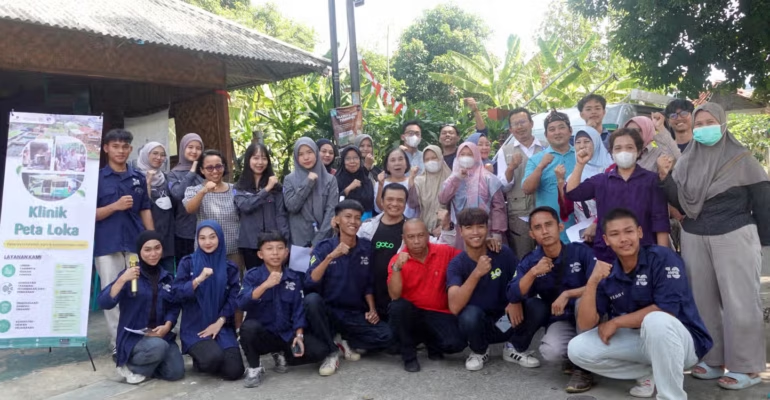
The Institute for Agromaritime Development and Innopreneurship Acceleration (LPA2I) at IPB University, through its Division of Farmer and Fisherman Development, held a Peta Loka Clinic at Bale Warga Tirtajaya in Depok on Sunday (9/6).
This event was an effort to bring agricultural expertise closer to urban communities by implementing a mobile consultation service concept through IPB University’s Plant Clinic Vehicle.
The event was attended by 32 participants, including representatives from the Tirtajaya Village Office, the D’rangrang Community, local residents, urban farming practitioners, representatives from farming communities, and local government officials.
Participants had the opportunity to discuss and consult directly on various plant related issues they face in urban farming activities.
Bonjok Istiaji, SP, MSi, served as an expert and resource person during the consultation session with participants. As the Assistant for Farmer and Fisherman Development at IPB University’s LPA2I, he stated that the Peta Loka Clinic is a concrete example of the institution’s efforts to bring consultation services closer to urban communities.
“While people in rural areas are accustomed to large scale farming, those in urban areas need guidance on how to care for and maintain the health of plants in their neighborhoods,” he said.
Agus Sulaeman, Acting Chief (Plt) of the Tirtajaya Subdistrict, expressed his appreciation for the IPB University Peta Loka Clinic, which he believes benefits the residents and the farming community in the Tirtajaya Subdistrict.
“This activity is very beneficial for the residents of Tirtajaya Village, including the farming community in our area. The youth group and the women of Tirtajaya have learned a great deal, particularly in identifying various problems with the plants they cultivate on a daily basis,” said Agus.
He hopes that similar activities can be held again with a broader reach so that more people can benefit from these consultation services.
Identifying Plant Problems with Experts
During the consultation session, experts and the team introduced various mini-laboratory facilities in IPB University’s Mobile Plant Clinic to assist with the initial identification of plant samples brought in by residents.
Some of the plant problems identified included “blendok” disease in citrus plants, fruit drop in water apples, scale insect infestations on raspberries and blackberries, and stunting growth in eggplant plants.
Through these consultations, residents received tailored solutions for their specific plant issues, ranging from improving nutrition and environmental conditions, to pest and disease control, and even quarantine measures for affected plants.
One participant, Ria, said, “Alhamdulillah, the Peta Loka Clinic has been very helpful, especially in addressing pest and disease problems in plants. I am personally a member of several communities in the Tirtajaya neighborhood and hope that similar activities can be held in our associations,” said Ria.
Expanding Access to Consultations through IPB Digitani
In addition to in-person consultations, the team also introduced IPB Digitani. This digital platform serves as a means for the public to obtain information and consult with IPB University experts more easily, regardless of distance.
Through the Peta Loka Clinic, LPA2I at IPB University continues to promote expert services that are more accessible and closer to the community. This collaboration is expected to strengthen the development of self-reliant, green, and sustainable urban agriculture. (*/Rz) (IAAS/STD)

