IPB University Lecturer Warns of the Dangers of Haematomas in Athletes: Do Not Underestimate Bruises Following Impacts
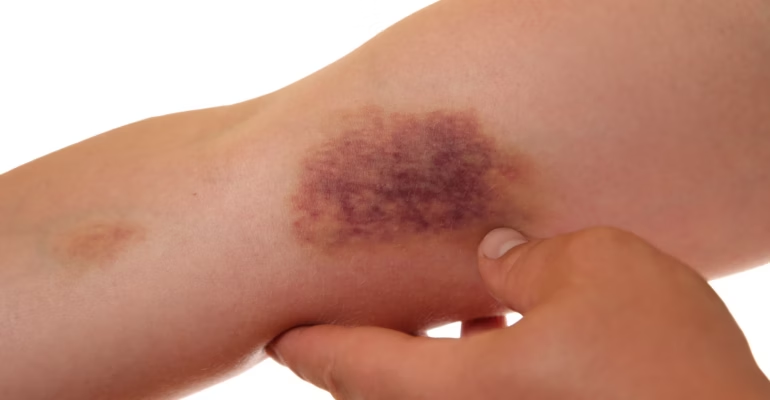
Hard impacts during a match do not always result in mere pain or ordinary bruises. Under certain conditions, an impact can cause a haematoma, an accumulation of blood outside the blood vessels resulting from damage to blood vessels in the muscle tissue. If not treated properly, this condition can lead to swelling, pain, and even impaired muscle function.
dr Agil Wahyu Wicaksono, MBiomed, a lecturer at the Faculty of Medicine and Nutrition (FKGiz) at IPB University, explained that haematomas in muscle tissue are quite common in sports involving physical contact, such as football, rugby and hockey.
“A haematoma is a localised collection of blood outside the blood vessels. It occurs when blood leaks from damaged arteries, veins or capillaries and accumulates in the muscle tissue that has sustained an impact.
In athletes, this condition generally results from an impact that causes damage to arteries, veins or capillaries, leading to blood leaking out and accumulating in the muscle tissue,” he explained.
According to dr Agil, haematomas are not only caused by direct impact. Excessive strain or load can also cause muscle fibres to tear, thereby damaging the blood vessels within the muscle. The accumulated blood can then lead to swelling and pain.
If blood becomes trapped within the muscle fascia, pressure within the tissue may increase, potentially disrupting blood flow and the function of that muscle. Conversely, if the muscle fascia itself is torn, blood may spread into the tissue surrounding the muscle, making the bruise or haematoma appear more extensive.
Athletes also need to recognise the signs of both mild haematomas and those requiring further examination.
“If the swelling grows rapidly, the pain becomes more severe, the injured limb is difficult to move, there is a change in shape, or the condition does not improve and is even getting worse, you should seek immediate medical attention at a healthcare facility,” he said.
First Aid: PRICE
For first aid, dr Agil recommends the PRICE principle: protect, rest, ice, compression and elevation. The injured body part needs to be protected and rested. Applying a cold compress for 10–20 minutes can help reduce pain and swelling. The injured area can also be compressed with an elastic bandage and positioned higher than the heart.
“A common mistake is to massage the injured area straight away or to use a hot compress. During the first 24–72 hours, these actions should be avoided as they can increase blood flow to the injured area, thereby risking worsening the bleeding and swelling,” he explained.
dr Agil said that the recovery time for a haematoma varies depending on its severity. In the case of a mild haematoma that does not require surgical treatment, athletes can, on average, return to sport in around four weeks. However, for more severe injuries, or those requiring surgery, recovery may take six to eight weeks or more.
“Do not simply focus on the number of days. Athletes should only return to competition when they are no longer in pain, their range of motion and muscle strength have returned to normal, and they are able to perform sporting movements as they normally would, such as running or performing changes of direction as part of agility training, without any discomfort,” he concluded. (AS) (IAAS/HRD)