
How Long Are Leftovers in the Refrigerator Safe to Eat? An IPB University Expert Reveals the Facts
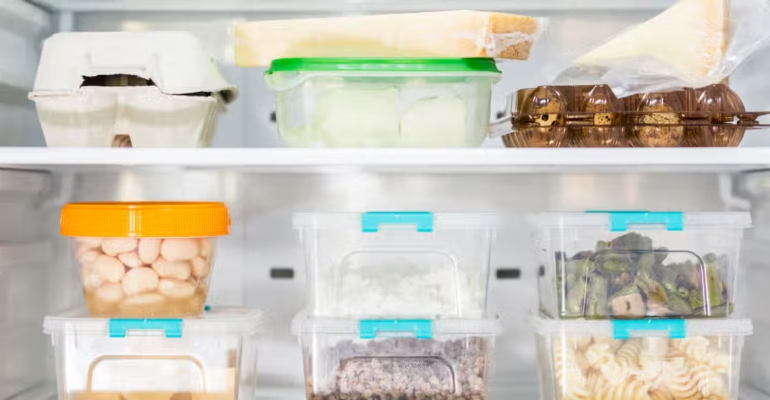
Storing leftovers in the refrigerator can be a practical way to keep food edible while reducing food waste.
However, according to Rosyda Dianah, SKM, MKM, a lecturer in Food Service Industry Management and Nutrition at the IPB University Vocational School, this practice does not automatically make the food safe. If done improperly, food can become a source of foodborne disease and suffer a decline in nutritional quality.
It Only Slows Down Bacteria
“Putting food in the refrigerator doesn’t mean the food spoilage process stops completely. Bacteria don’t die in the refrigerator. A refrigerator set at a temperature of about 1–4°C serves to slow down the growth of most bacteria, not to sterilize the food. Therefore, food still has a limited shelf life,” she explained.
According to her, the practice of storing leftovers in the refrigerator is generally safe and acceptable, but certain requirements must be met. This depends heavily on the cooling method, storage temperature, duration of storage, and the reheating process.
From a food safety perspective, Rosyda emphasized the importance of avoiding the temperature danger zone (5°C to 60°C), a temperature range that allows microorganisms to multiply more rapidly.
How Many Days Can Food in the Refrigerator Be Safely Consumed?
In general, cooked food stored at a temperature of ≤4°C is recommended to be consumed within 3–4 days. However, some foods have different characteristics. Cooked rice and pasta, for example, require special attention due to their potential association with Bacillus cereus spores.
From a nutritional perspective, storage and reheating can affect certain nutrients. Water-soluble vitamins, such as vitamin C and the B complex vitamins, are relatively sensitive to heat and oxidation.
Meanwhile, fats, particularly unsaturated fatty acids, can undergo oxidation if food is stored in containers that aren’t properly sealed.
On the other hand, carbohydrate-rich foods like rice, potatoes, and pasta may undergo changes in their starch when cooled. This process can make some of the starch harder to digest, which may help control blood sugar spikes and support digestive health, provided the food is stored properly and remains free from microbial contamination.
Don’t Leave Food Out at Room Temperature for Too Long
Common mistakes people make include leaving food out at room temperature for too long, storing food in containers that are too large or too deep, not sealing containers properly, not monitoring the refrigerator temperature, and reheating food too frequently.
Additionally, leftovers should not be placed near raw food to prevent cross-contamination.
To reduce risks and prevent food waste, Rosyda advises the public to follow the simple “2–4–74” rule. These numbers mean that perishable foods should not be left at room temperature for more than 2 hours, should be stored at a temperature of around 4°C or lower, and should be reheated evenly to approximately 74°C.
“Food safety doesn’t mean that all leftovers must be thrown away immediately. Proper storage planning can actually help reduce food waste,” she concluded. (dr) (IAAS/WSG)

