IPB University Expert: Cheap Refillable Drinking Water Is Still Safe, But the Public Needs to Be Careful
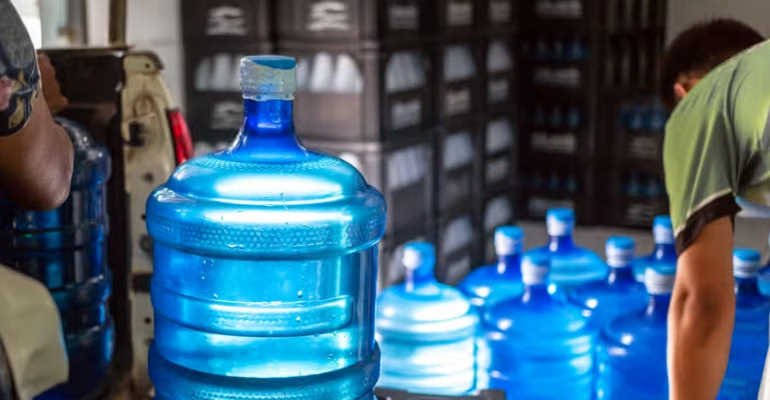
Refillable drinking water is not necessarily harmful to health. However, the public cannot assume that all refillable drinking water is safe simply because it has undergone a filtration process.
IPB University expert on pollution and ecotoxicology, Prof Etty Riani, stated that the safety of the water depends heavily on the quality of the water source, the treatment process, the condition of the facilities, the hygiene of the operators, and how the water is handled after filling.
“The risks can vary, ranging from low to high. The magnitude of the risk depends heavily on the quality of the water source, the effectiveness of the treatment process, the condition of the facilities, the hygiene of the operators, and how the water is handled after filling,” said Prof Etty.
According to her, the quality of raw water is one of the key factors that must be considered. Water sources contaminated by domestic wastewater, septic tanks, agricultural activities, industrial waste, and even mining can carry various types of contaminants that may not all be completely removed through filtration technology.
“We must ensure that water sources are not contaminated by domestic wastewater and septic tanks, agricultural activities such as fertilizers and pesticides, industrial waste, mining, and so on. Filtration technology may not necessarily be able to remove all types of these contaminants due to its varying capabilities and limitations,” she explained.
Beware of Contamination After Treatment
Prof Etty explained that contaminants in refilled water can be microbiological, such as bacteria, viruses, and protozoa, or chemical, such as arsenic, lead, cadmium, chromium, nitrate, nitrite, iron, manganese, aluminum, pesticides, and hydrocarbons.
Even water that has met the requirements can become contaminated again after the treatment process. Hoses, faucets, tanks, filters, water jugs, and the operator’s hands can all be sources of contamination if they are not kept clean.
“The condition of the water jugs, tanks, hoses, and equipment is crucial because this stage can be a critical point for contamination,” said Prof Etty.
Be Careful When Choosing a Drinking Water Depot
The public can perform a simple inspection before purchasing refillable water. The depot must appear clean, with minimal dust, trash, or standing water. Equipment should be organized and well maintained, while operators must keep their hands and clothing clean.
Water jugs must not be cracked, moldy, smelly, or stored in open areas. Consumers can also inquire about the source of the raw water, laboratory test results, and whether the facility holds a Certificate of Hygiene and Sanitation Compliance (SLHS).
“The most effective solution is to find a water refill station that implements risk control measures throughout the entire drinking water supply chain,” said Prof Etty. These controls include raw water quality, appropriate treatment technology, filter maintenance, disinfection, equipment cleanliness, operator hygiene, laboratory testing, and prevention of recontamination.
According to her, public education needs to be strengthened so that safe drinking water remains available at an affordable price. (Fj) (IAAS/WSG)