IPB University Consumer Behavior Expert Reveals the Influence of Packaging Design on Purchasing Decisions
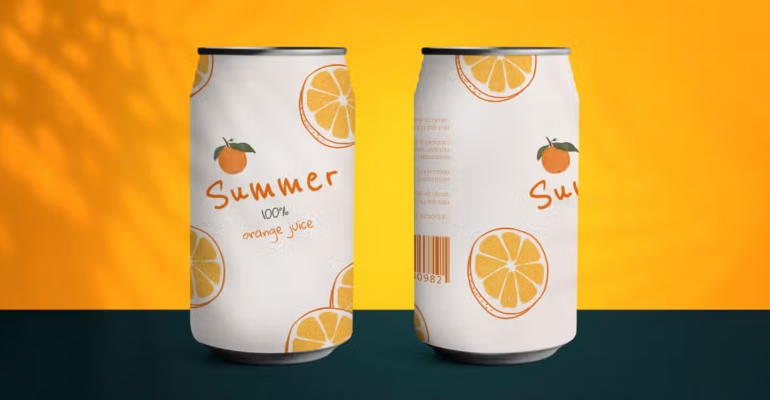
The design of juice packaging in Japan featuring attractive fruit images has drawn attention because it not only serves as a visual appeal but can also provide consumers with cues about the product being offered.
Professor of Consumer Behavior Science at IPB University, Prof Ujang Sumarwan, explained that packaging design can have a significant influence when consumers have to make quick choices among various brands.
“When consumers have to choose quickly among many brands, packaging becomes a marketing stimulus,” said Prof Ujang.
According to him, colors, shapes, sizes, fruit images, typography, and the information displayed on packaging all become part of the consumer information processing process. These elements serve as initial stimuli that attract attention before consumers decide to examine further product information.
Perceptual Shortcut
In the context of juice packaging, fruit images can serve as easily recognizable visual cues. For example, images of oranges, apples, mangoes, or grapes can immediately associate consumers with a particular type of fruit or flavor without requiring them to read lengthy descriptions.
“In information processing theory, images can function as a perceptual shortcut,” he explained.
According to Prof Ujang, the use of visuals is important because consumers have limitations in terms of time, attention, and their ability to process information. When shopping at a supermarket or convenience store, consumers may have only a few seconds to notice a product. Simple and easily recognizable visuals can help reduce the cognitive effort required to understand the product.
However, he emphasized that images on packaging do not always provide complete information. Fruit images can help consumers identify the type or flavor of juice, but they do not necessarily indicate the actual amount of fruit contained in the product.
“A fruit image may indicate that this is an orange product, but it does not necessarily answer what percentage of the product consists of fruit juice,” he said.
Therefore, visual elements on packaging should ideally be combined with verbal and numerical information. Consumers still need to pay attention to the product’s composition and labeling to determine its actual contents.
Prof Ujang also reminded consumers that images on packaging are part of marketing communication and do not, by themselves, constitute evidence of a product’s composition. A prominent fruit image may create a certain perception of the product, so consumers need to consider the information more comprehensively.
“The important principle is that visuals should help consumers understand the product, not merely make consumers buy the product,” he emphasized.
Thus, juice packaging serves not only as a container but also as a communication medium that helps consumers recognize and understand a product. In this regard, appropriate visual design can facilitate the decision making process, while clear information remains necessary to ensure that consumers’ perceptions correspond to the actual characteristics of the product. (Ez) (IAAS/HRD)