Cileungsi River Water Turns Black, IPB University Expert Highlights Dangers of Sediment and Waste
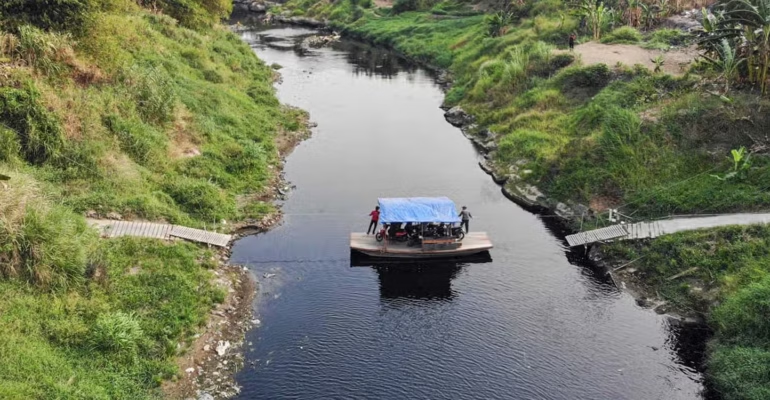
The Cileungsi River’s water has turned black and emits a pungent odor, indicating a serious water quality issue. This condition is likely to recur every dry season, especially during prolonged droughts, when water flow decreases, thereby reducing the river’s ability to dilute pollutant loads.
Prof Etty Riani, a full professor at IPB University’s Faculty of Fisheries and Marine Sciences (FPIK) and an expert in pollution and ecotoxicology, explained that these changes in color and odor are generally linked to high levels of organic matter from domestic waste, livestock, industry, and other sources.
According to her, organic matter entering rivers is broken down by microorganisms using oxygen. This process is reflected in increased biochemical oxygen demand (BOD), the amount of oxygen required to biologically break down organic matter, and chemical oxygen demand (COD), which is the amount of oxygen needed to chemically oxidize pollutants that are difficult to very difficult to break down.
“A large amount of organic matter causes oxygen to be consumed in its decomposition, leading to increased BOD and COD levels and a decrease in dissolved oxygen (DO),” she said.
A decrease in DO can lead to anaerobic or anoxic conditions, situations where oxygen levels are very low or nearly nonexistent. Under these conditions, bacteria can reduce sulfate to sulfide. The sulfide then reacts with iron to form black iron sulfide.
Meanwhile, hydrogen sulfide (H₂S) gas produces a characteristic rotten egg odor. Manganese compounds that undergo reduction can also cause the water to darken.
Color and Odor Alone Are Not Enough to Determine the Source of Pollution
Prof Etty emphasized that the color and odor of water are only early warning signs and are not sufficient to determine the type or source of the pollutant. “Without laboratory results, we can only say there are indications of pollution or water quality issues, not identify the type of waste or the culprit,” she said.
Rain following a dry season can also resuspend sediments containing organic matter and contaminants through the process of resuspension. This condition increases total suspended solids (TSS) and turbidity, reduces dissolved oxygen (DO), and releases ammonia, sulfides, phosphates, dissolved metals, organic compounds, and various other pollutants into the water column.
The impacts can range from gill damage, impaired growth and reproduction, to the death of fish, plankton, larvae, and sensitive benthic organisms. In the long term, pollutants also have the potential to accumulate in organisms’ bodies and be transferred through the food chain.
Since the Cileungsi River flows into the Bekasi River, which serves as a source of raw water, Prof Etty believes that a comprehensive water quality assessment is necessary. Key parameters include DO, BOD, COD, TSS, pH, ammonia, sulfide, heavy metals, oils and fats, as well as microbiological parameters.
“The river’s carrying capacity and load capacity should be assessed. It’s possible that these limits have already been far exceeded, meaning no further activities that discharge waste into the river should be allowed,” she said. (Fj) (IAAS/WSG)