IPB’s PKSPL Strengthens the Capacity of the Perlang Community in Coral Reef Rehabilitation
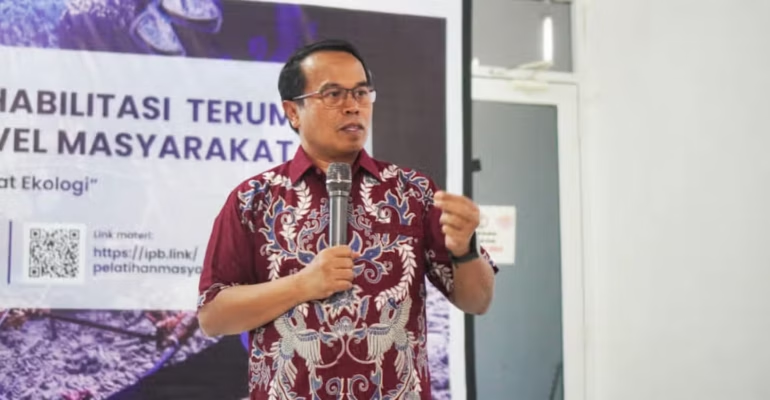
The Center for Coastal and Marine Resources Studies (PKSPL) at IPB University, in collaboration with the Indonesian Ministry of Environment/Environmental Management Agency (KLH/BPLH) and the United Nations Office for Project Services (UNOPS), is strengthening the capacity of the community in Perlang Village, Central Bangka Regency, Bangka Belitung Islands Province, in coral reef rehabilitation through the Community Level Coral Reef Rehabilitation Training (9/17–20).
A total of 30 community representatives from various sectors participated in the training program, which was designed to improve basic knowledge and skills in coral reef monitoring and rehabilitation. They came from youth organizations, tourism awareness groups (pokdarwis), fishermen’s groups, local village owned enterprises (BUMDes), village administrators, community leaders, religious leaders, the Family Empowerment and Welfare Movement (TP PKK), and local communities.
The Chairman of PKSPL at IPB University, Prof Yonvitner, stated that participation from community involvement is a crucial component in the sustainability of coastal ecosystem restoration. “This training serves as a first step to prepare participants before the rehabilitation of damaged coral reefs begins. The success of the rehabilitation certainly requires cooperation from all parties, including the government and the community,” he said.
During the training, participants learned about coral reef ecology, ecological roles, threats to the ecosystem, indicators of coral health, as well as observation and data collection techniques. The training then continued with fieldwork, including coral reef transplantation on September 19 and 20, 2026, so that participants could gain hands on experience in carrying out rehabilitation efforts.
The National Coordinator of SCS-SAP UNOPS, Drs Heru Waluyo Koesworo, MCom, hopes that the results of the rehabilitation will become an asset owned and maintained by the community of Perlang Village.
“It is hoped that the results of the rehabilitation will be embraced by the village as its own, to be maintained and developed as a sustainable tourism asset,” he said.
Meanwhile, Aditya Yuniarti, ST, MM, from the Directorate of Pollution and Damage Control in Coastal and Marine Areas, emphasized the importance of post-rehabilitation maintenance.
“Previous monitoring results showed that some of the transplanted corals are still overgrown with weeds, so we hope the community will work together to protect and maintain them,” she said.
Through this initiative, IPB University’s PKSPL is fostering community capacity to play an active role in the sustainable monitoring and rehabilitation of coral reefs. These efforts support the Sustainable Development Goals (SDGs) by strengthening community knowledge, restoring coastal ecosystems, and fostering multi stakeholder collaboration. (*/Rz)(IAAS/DAM)