5 Kg Rice Packages Are Becoming Rare, IPB University Expert Explains the Impact on Consumers
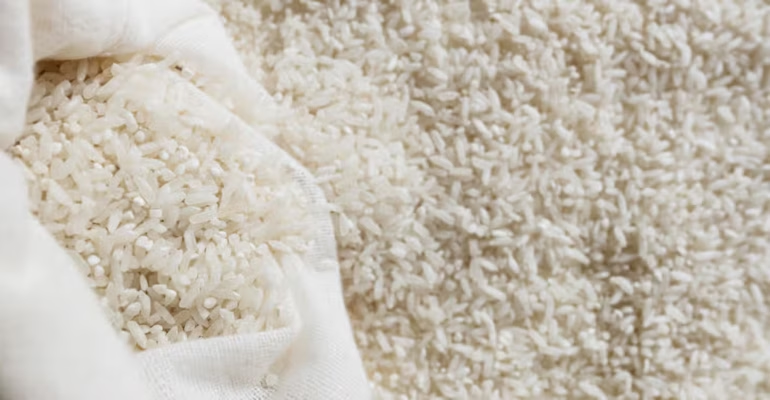
A hot topic of discussion online, 5 kilogram (kg) packages of premium rice are reportedly becoming hard to find in some areas. This situation has sparked concern among the public, especially since rice is a staple food.
IPB University Professor of Consumer Behavior, Prof Megawati Simanjuntak, said this situation could influence how consumers make decisions. When they hear that a product is becoming hard to find, consumers tend to feel the need to buy it immediately before it runs out completely.
“When the 5 kg packages start to become rare, people will certainly feel worried right away. Especially if they’ve already heard that the product is getting hard to find, they usually immediately think about buying or stocking up on more,” said Prof Megawati.
Why Are 5 kg Packages So Popular?
According to Prof Megawati, 5 kg packages of rice are a highly sought after choice because they align with household habits. This amount is considered sufficient to meet daily needs, while the price remains relatively affordable for a single shopping trip.
“The 5 kg package is more practical to store than larger packages. Additionally, there are many brands available in this 5 kg size, and consumers have their own preferences for the rice they like, so many consumers prefer the 5 kg package,” she added.
Therefore, when the size they usually buy is hard to find, consumers do not always react with panic. Some may choose substitute products that they still consider suitable.
Switching Brands or Sizes
|“There are two possible shifts related to this phenomenon,” she explained.
First, consumers can switch to a different package size from the same brand, such as the 10 kg package. This option allows consumers to continue purchasing their usual brand, even though the cost per purchase increases.
Second, consumers can switch to options they hadn’t previously considered, such as SPHP rice from Bulog, which is more affordable.
Perception Plays a Role, Avoid Panic Buying
She noted that this situation does not necessarily mean the national rice supply has run out or is in short supply. In her view, the issue may be related to production or distribution costs.
However, the constant flow of information about shortages can influence consumer perception and potentially trigger panic buying. In such situations, purchasing decisions are no longer based solely on need but also on concerns that the product will become increasingly difficult to obtain.
From a consumer behavior perspective, Prof Megawati urged the public not to panic or follow the crowd in hoarding rice.
“The public doesn’t need to panic or follow the crowd in hoarding. Just buy what you need. If your usual brand isn’t available, you can consider alternatives that are still suitable in terms of quality and price,” she said.
On the other hand, the government needs to ensure that information regarding rice availability and prices is clearly communicated to the public. This is important so that consumers do not make decisions based solely on rumors or fears of running out of stock. (dh) (IAAS/WSG)