Why Did the Fire Spread So Quickly at Bromo? IPB University Professor Explains the Triggering Factors
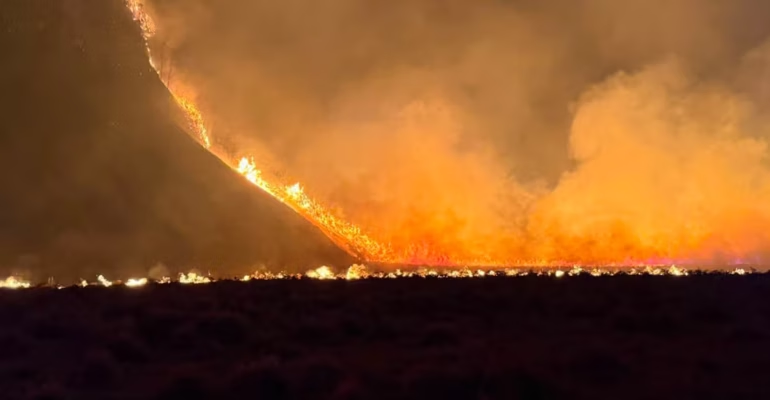
Fires in the Bromo Tengger Semeru National Park (TNBTS) area require a more robust fire control system because the geographical characteristics, dry vegetation, and changes in wind direction and speed can accelerate the spread of fire.
Prof Bambang Hero Saharjo, a professor at the Faculty of Forestry and Environment at IPB University, believes that early detection and readiness of firefighting equipment are key to preventing fires from escalating into major blazes.
“Monitoring for signs of fire must be conducted as early and as accurately as possible. The goal is to stop any potential fire before it develops into a major blaze,” said Prof Bambang.
According to him, the terrain of TNBTS cannot be compared to other areas. A number of fire prone areas are open spaces with highly flammable fuel.
When a fire moves toward sloped terrain and is fueled by wind, its spread can accelerate, making it difficult to control with limited firefighting equipment.
“The geographical shape of TNBTS, which resembles a cauldron, also influences the fire’s spread patterns. Changes in wind direction and speed can make the fire’s movement difficult to predict. These conditions become even more risky when large amounts of dry vegetation are available as fuel,” he explained.
Therefore, he noted, firefighting strategies cannot rely on a single method. A combination of ground-based and aerial firefighting efforts must be considered based on on-site conditions, supported by adequate facilities and infrastructure. Helicopters must also be deployed appropriately to prevent wind gusts from inadvertently sparking new fire outbreaks.
According to Prof Bambang, if a fire spreads, the ecological impacts to watch out for include the loss of surface cover, increased surface heating, and disruption of ecosystem recovery processes.
“These risks are particularly significant because TNBTS features distinctive vegetation across various elevations, ranging from puspa, rasamala, and saninten in the lower mountain zone to mountain pine, Javanese edelweiss, and cantigi in the upper mountain zone,” he said.
Prof Bambang emphasized that extinguishing the fire does not automatically guarantee the area’s safety. Monitoring systems must ensure there are no potential hotspots that could reignite. In addition to increasing the number and capabilities of personnel, community members involved in firefighting also need to be equipped with basic knowledge so that their actions do not inadvertently fuel the fire.
“Fire control must be carried out thoroughly, from prevention and suppression to post-fire management. The major fire of 2023 should serve as a lesson to implement changes so that similar incidents do not recur,” he said. (dr) (IAAS/WSG)