Is It True That Parrotfish Eat Coral Reefs? Here’s What an IPB University Expert Says
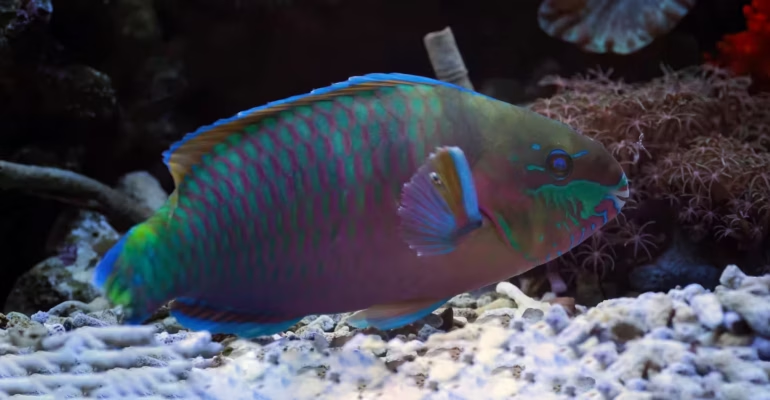
There’s a widespread belief that parrotfish eat coral reefs, which results in the white sand on beaches. Although this may sound destructive, this behavior actually plays a crucial role in maintaining the balance of the marine ecosystem.
Dr Adriani Sunuddin, a lecturer in the Department of Marine Science and Technology at IPB University, explains that parrotfish do indeed bite and break down parts of the coral’s calcareous matrix while foraging.
“After passing through their digestive system, the remaining material is excreted in the form of very fine sand grains that gradually settle along the shoreline, thereby contributing to the formation of white sand on the beach,” she said.
Coral Reef Ecosystem Engineers
However, she emphasized that the primary target of most parrotfish is not the coral itself, but rather the algae and microorganisms attached to the surface of the coral reef.
“Parrotfish act as coral reef ecosystem engineers. Their scraping and chewing activities provide far greater ecological benefits than the physical damage they cause,” she said.
Based on their feeding habits, parrotfish are divided into two groups, scrapers and excavators. Dr Adriani explained that scraper parrotfish help clear fast-growing algae so that it does not dominate the surface of the coral reef. This creates space for coral larvae to attach and grow into new colonies.
Meanwhile, dredging operations help spread coral fragments and living endosymbiotic algae, thereby supporting the natural regeneration of coral reefs.
Impact of Population Decline
She noted that the decline in the parrotfish population due to overfishing and habitat destruction can trigger various ecological impacts. These include algal blooms that inhibit coral growth, a reduction in natural sand production, and a decline in coral reefs’ resistance to disease, coral bleaching, and other environmental disturbances.
“A single adult parrotfish can produce approximately 90–450 kilograms of sand each year, while the bumphead parrotfish (Bolbometopon) can produce more than five metric tons of sand annually. This sand is a key component of the small islands and white sand beaches found in coral reef regions,” she explained.
To preserve these ecological functions, Dr Adriani advocates for community based parrotfish management, the strengthening of customary laws in coastal areas, the implementation of simple fishing regulations, and education on the importance of parrotfish for the health of coral reef ecosystems.
“Parrotfish conservation is not just about protecting a single fish species, but also about maintaining the coral reefs’ ability to recover, protecting marine biodiversity, and ensuring the sustainability of coastal ecosystems,” she concluded. (Lp) (IAAS/LAN)