Zebra Striped Cattle May Reduce Fly Bites by Up to 50 Percent, An Explanation from an IPB University Expert
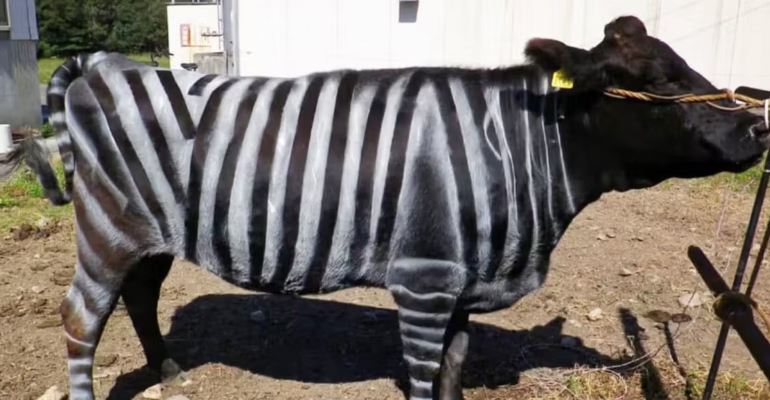
Research by Japanese scientists, winners of the Ig Nobel Prize, who painted cows’ bodies with black-white zebra like stripes, has shown that this method can reduce the number of bites from blood sucking flies by up to 50 percent.
Responding to these findings, Prof Upik Kesumawati, a professor at the School of Veterinary Medicine and Biomedical Sciences (SKHB) at IPB University, believes this unique method has great potential to serve as a more environmentally friendly alternative to chemical insecticides for pest control.
“Until now, control has generally been carried out using insecticides. Blood sucking flies such as the stable fly (Stomoxys calcitrans) and the horn fly (Haematobia exigua) not only cause pain from their bites but can also transmit diseases (as vectors) and reduce livestock productivity,” she said.
Optical Illusion Disrupts Flies’ Vision
According to Prof Upik, the effectiveness of the zebra pattern is linked to how insects process visual information.
“Black-white striped patterns, like those of a zebra, create an optical illusion that disrupts the insects’ visual system. The flies misjudge distance and speed, making it difficult for them to land on the cow’s body,” she explained.
She added that this method is most effective against blood-sucking flies that are active during the day. Meanwhile, mosquitoes and midges, which are more active at night, rely on chemical sensors and the host’s body heat, so the zebra pattern’s effect is significantly reduced.
Although there is great potential for this method to be implemented in Indonesia as a non chemical pest control measure, Prof Upik noted that it still requires further research, particularly regarding paint materials that are safe for livestock, the paint’s durability in tropical climates, the most effective stripe pattern size, and a cost analysis of implementation at the farmer level.
IPB University Develops Zebra Patterned Coat
Prof Upik revealed that a similar idea had actually been developed by IPB University students through the Student Creativity Program: Karsa Cipta (PKM-KC) in 2021.
The innovation, titled MANCEZ (Zebra Patterned Coat as an Insect Bite Preventative and Body Thermoregulation Regulator for Cattle), was developed by Cahya Jupisa and her team under Prof Upik’s guidance. Unlike the Japanese study, which involved painting the cows’ bodies, this innovation uses a zebra-patterned coat that is worn by the cattle.
MANCEZ successfully secured PKM-KC funding, advanced to the 34th National Student Scientific Week (PIMNAS), and won the Favorite PKM Award.
Based on test results, the zebra-patterned coat was able to reduce bites from Stomoxys calsitrans flies by approximately 50 percent while helping to maintain a comfortable body temperature for the cattle and reducing stress caused by insect disturbances. (Fj) (IAAS/WSG)