TNC IPB University Highlights the Importance of Gender Inclusion in Sustainable Capture Fisheries
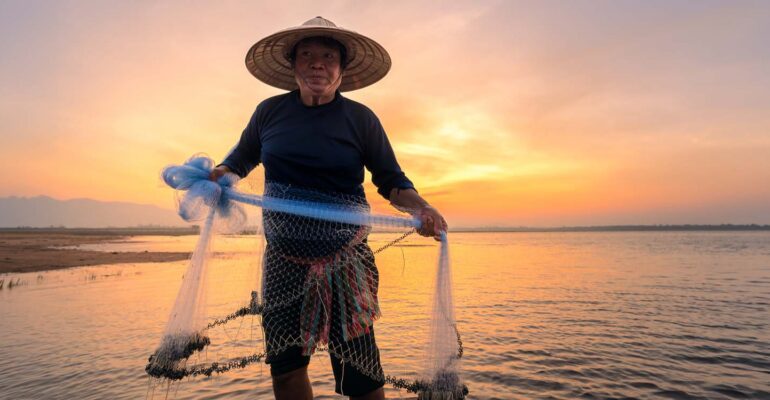
Gender is a critical issue in the capture fisheries sector. The Chairman of the Institute for Agromaritime Development and Innopreneurship Acceleration (LPA2I) at IPB University, Dr Handian Purwawangsa, stated that approximately 3,9 million women fishers in Indonesia are actively involved throughout the fisheries supply chain.
“They contribute around 48 percent of the total household income of fishing families in coastal areas. Their workload is extraordinary, encompassing up to 17 productive hours per day, ranging from pre fishing preparation and post harvest activities to product marketing,” said Dr Handian during the opening of the webinar series organized by the Tani Nelayan Center (TNC) of IPB University on (6/30).
However, Dr Handian noted that the majority of these 3,9 million women fishers have yet to receive equal professional recognition, limiting their access to capital, technology, and insurance. According to him, the inequalities faced by women fishers represent an innovation challenge.
“We are committed to promoting more inclusive practices in capture fisheries while strengthening the role of women in the sector. Through the 15th edition of TNC Talks, we hope to formulate concrete solutions to improve the current situation,” said Dr Handian.
The 15th TNC IPB University webinar series carried the theme “Gender Inclusion for Sustainable Capture Fisheries: Strengthening the Role of Women Fishers.” The event featured three speakers, including Dr Akhmad Solihin, a lecturer from the Department of Fisheries Resources Utilization at IPB University.
Dr Akhmad explained that existing regulations in Indonesia have yet to fully recognize women as fisheries actors. “In my view, almost all of our regulations remain far from being gender responsive. They are largely normative and do not specifically address the role of gender in fisheries and fisheries-related business activities,” he said.
Beyond regulatory issues, he pointed out that fisheries data continue to be based primarily on male statistics, while government assistance programs tend to target boat owners rather than fishers themselves. Institutionally, women also remain underrepresented in leadership positions, often serving only as treasurers or ordinary members.
“We hope that women fishers will become actively involved in fisheries institutions and organizations,” he added.
To strengthen the role of women in sustainable fisheries, Dr Akhmad emphasized the need for policy improvements. First, women fishers must receive formal recognition. Second, the government should ensure equal access to resources, public services, and innovation to enhance their capacity and competitiveness. Third, women fishers should be meaningfully involved in planning, decision making, and the evaluation of fisheries policies.
“Gender-inclusive and gender responsive policies will help create capture fisheries that are equitable, productive, and sustainable. Women are not merely supporters of the fisheries sector, they are key actors in ensuring the sustainability of capture fisheries,” Dr Akhmad concluded. (MHT) (IAAS/ADF)