
Misuse of Wildlife Feed Budgets Risks Undermining Conservation Goals, the Explanation from an IPB University Expert
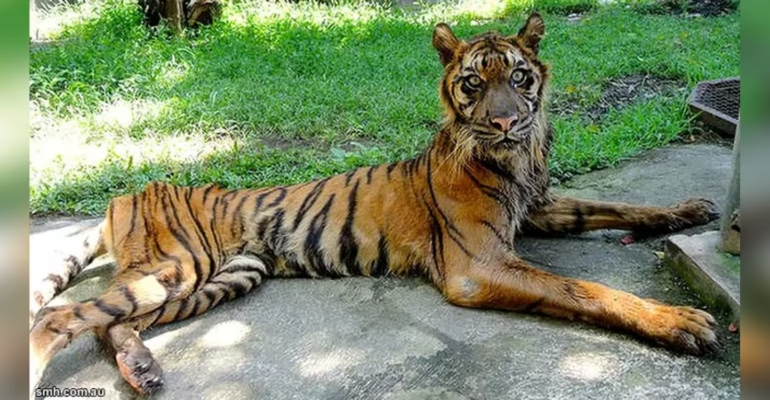
Alleged cases of misuse of wildlife feed budgets at conservation institutions serve as a reminder that wildlife management is not only about financial governance but also involves a moral responsibility toward living creatures that are entirely dependent on humans.
This was emphasized by Dr Abdul Haris Mustari, a lecturer in Forest Resource Conservation and Ecotourism at IPB University. He noted that the misuse of animal feed budgets can have a ripple effect on animal health, animal welfare, and the success of conservation programs.
“The misuse of animal feed budgets is not merely an administrative issue, but a moral one. Animals also experience hunger, thirst, and stress. Therefore, conservation organizations must have sufficient and sustainable funding to ensure animal welfare is maintained,” he emphasized.
He added that conservation organizations should be positioned as vehicles for research, education, and raising public awareness about the importance of wildlife conservation.
Facing Two Stresses
Animals kept in enclosures face conditions that are vastly different from those in their natural habitats. According to Dr Haris, animals in enclosures experience two stresses simultaneously, limited access to food and water and enclosure conditions that often do not fully meet animal welfare principles.
“If the feed budget is an issue, then both the quality and quantity of food will continue to decline,” he added.
In addition to losing their freedom to forage, the animals must also adapt to limited space, making them more susceptible to stress.
Dr Haris explained that in their natural habitats, animals have access to a much wider variety of foods, ensuring their nutritional needs are met in a balanced way. Herbivores, carnivores, and omnivores all obtain food sources that complement each other’s nutritional content.
In contrast, animals in conservation facilities consume only the food provided by the management, so nutritional adequacy depends heavily on the quality of management and the availability of funding.
To ensure the animals’ needs are met, he emphasized that feed management must be based on the biological requirements of each species.
For example, herbivores require forage amounting to about 8–12 percent of their body weight daily. Meanwhile, the Sumatran tiger, as a hypercarnivore, requires about 6–7 kilograms of meat per day—or approximately 5–6 percent of its body weight.
Meanwhile, wild animal populations in their natural habitats must remain the top conservation priority through habitat protection and sustainable management.
Nutrient Deficiency Affects Reproduction
He added that nutrient deficiency has a direct impact on the reproductive capacity of animals, both male and female.
In fact, malnourished parents are at risk of producing offspring with suboptimal health. This situation can create a cycle of declining quality in animal populations born and raised in captivity.
Furthermore, Dr Haris noted that captive bred animals generally face significant challenges when released into their natural habitats. Their dependence on humans for food reduces their ability to adapt and compete with wild animals.
In addition to requiring high rehabilitation costs, improper reintroduction also has the potential to affect the genetic quality of wild populations that have already adapted to their natural habitats. (dr) (IAAS/EPK)

