IPB University Researcher Develops a Business Model for Juvenile Lobsters
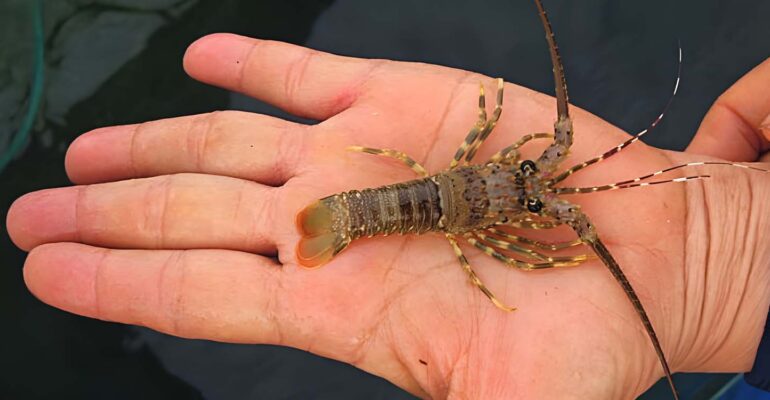
Dr Irzal Effendi, a researcher at IPB University’s Faculty of Fisheries and Marine Sciences (FPIK), has developed a concept for juvenile lobsters as an intermediate product in the lobster aquaculture chain. This innovation is expected to strengthen the commercialization of research outcomes while promoting the sustainable utilization of lobster larvae (BBL).
Until now, the high value lobster market has generally been limited to two segments: lobster larvae (BBL) and market-sized lobsters weighing over 150 grams per individual. Therefore, the IPB University research team introduced juvenile lobsters as a new product with market potential and added value.
“Based on our scientific analysis, we are promoting a new product called juvenile lobsters weighing 10 to 50 grams. The hope is that, in the future, there will be a supply of edible lobsters derived from community based grow out operations,” he said.
According to Dr Irzal, this concept stems from scientific understanding of the lobster life cycle, which has an extremely high natural mortality rate during the larval to juvenile stages due to predation in the ocean.
Through a controlled aquaculture system, lobster survival rates can be improved, allowing resources previously lost in the wild to be utilized more productively.
“Research shows that lobsters take about 140 days to reach a size of 20–30 grams. In addition, rearing juvenile lobsters in a seabed system yields better production performance compared to other methods,” he said.
From an economic perspective, a study by IPB University indicates that the dederan lobster business holds promising prospects. At a size of approximately 50 grams per lobster, dederan lobsters have an average selling price of Rp26.676 per lobster.
Meanwhile, the ideal seed price is estimated not to exceed Rp18.000 per individual to ensure the farming business remains profitable while not compromising the welfare of capture fishermen.
“Based on our calculations, the spiny lobster farming business has a revenue cost (RC) ratio of 1,28. This indicates that the business is economically viable for development,” he stated.
Furthermore, Dr Irzal noted that demand for lobsters in the international market remains very high, particularly from Vietnam and China. During certain periods, such as ahead of the Lunar New Year when natural supplies decline, the price of pearl lobsters can reach Rp950.000 per kilogram.
In addition to developing aquaculture technology, IPB University is also promoting a community based dederan lobster development model. A number of local governments, such as those in Simeulue, Kaimana, and South Halmahera, have expressed interest in developing lobster aquaculture training and mentoring programs in collaboration with IPB University.
“Actually, the key lies in human resources. That is why we want to build the community’s capacity so they can become skilled lobster farmers,” he said.
Currently, the survival rate (SR) of lobsters from IPB University’s research has reached 71 percent. The research team aims to increase the SR to 73 percent by 2026 and continue to raise it to 75–78 percent by 2027 through improvements in rearing technology, feed, and aquaculture management. (dr) (IAAS/KQA)