Utilizing an Ethological Approach, IPB Expert’s LED Technology Helps Fishermen Catch Fish More Efficiently and Selectively
Professor at the Faculty of Fisheries and Marine Sciences of IPB University, Prof Mochammad Riyanto, revealed that the utilization of LED lights based on fish behavior is capable of increasing fishing efficiency while minimizing ecological impacts. He conveyed this during the IPB University Professor Scientific Oration on Saturday (5/23).
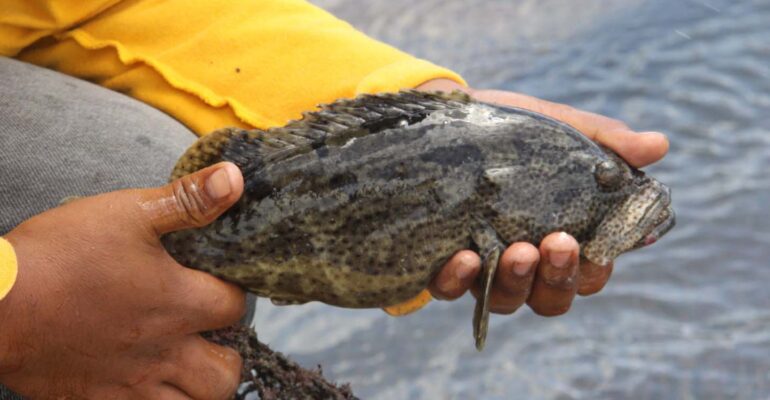
One of the innovations developed is the use of green LED lights combined with seawater batteries as a form of renewable energy. This technology has generated two patents and has been proven to deliver optimal performance in terms of productivity and efficiency. In fact, green LED lights can substitute natural bait for commodities such as red snapper and grouper.
In practice, the use of green LED lights on gillnets is able to reduce sea turtle bycatch by up to 60 percent without decreasing the primary target catch. Meanwhile, red LED lights have also shown significant results, reducing horseshoe crab catch by up to 63 percent and suppressing shark catch by up to 64 percent in the initial phases.
According to Prof Riyanto, this innovation stems from a fish ethology approach, which is an understanding of fish behavior such as responses to light, migration patterns, and feeding habits.
“This approach enables the design of more selective fishing gear to reduce bycatch,” he stated during his scientific oration at the IPB Dramaga Campus.
He assessed that a fish behavior-based approach is crucial amidst serious pressures facing Indonesia’s capture fisheries sector. A portion of fish stocks has reached maximum utilization to over exploited conditions, exacerbated by climate change, habitat degradation, and illegal fishing practices.
In addition to lighting technology, efforts to enhance selectivity are also carried out through the development of bycatch reduction devices (BRD), such as turtle excluder devices (TED) in shrimp trawl fisheries in the Arafura Sea, which have been proven to increase shrimp catches.
On the other hand, capture fisheries also face the threat of abandoned, lost, and discarded fishing gear (ALDFG), which accounts for approximately 10 percent of global marine debris and causes economic losses for fishermen, reaching up to IDR 381 million per year in Cilacap.
To address this, Prof Riyanto urges the strengthening of regulations, fisherman education, and innovations in environmentally friendly fishing gear, including the use of biodegradable materials and the implementation of a circular economy.
In closing, he emphasized that the future of fisheries must move toward a more adaptive and science based approach.
“Future fisheries management must shift from a gear-based approach toward a species behavior and ecological impact-based approach,” he firmly stated.
This approach is expected not only to maintain the sustainability of marine resources but also to remain mindful of the welfare of small scale fishermen. (dh)