More Than Just Medical Care: The Significance of the Veterinary Profession for Society
In conjunction with the Oath Taking Ceremony for New Veterinarians, IPB University School of Veterinary and Biomedical Sciences, July 8, 2026
When people hear the term veterinarian, most imagine someone examining a sick cat, vaccinating a dog, or assisting with the birth of a calf in a barn. While this perception is not incorrect, the scope of the veterinary profession actually extends far beyond the care of pets or livestock. Behind their day to day activities, veterinarians carry out various important tasks that often go unnoticed but contribute significantly to human health, food safety, animal welfare, and environmental balance.
The veterinary profession sits at the intersection of animal, human, and environmental health. Under the concept of one health, these three are interconnected and inseparable. We live alongside animals, consume animal products, share the same environment, and may be exposed to diseases transmitted by animals. Therefore, maintaining animal health is not only the responsibility of farmers or animal lovers but also a vital part of safeguarding public health.
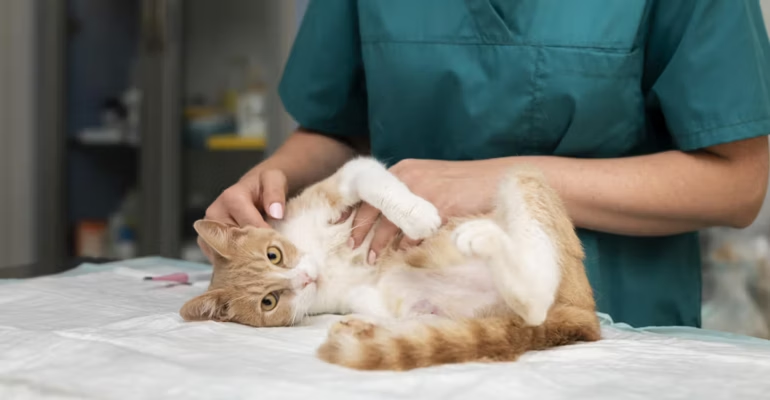
One of a veterinarian’s primary responsibilities is to prevent and control diseases in animals. For pets, veterinarians help ensure that cats, dogs, rabbits, birds, or other beloved animals stay healthy through examinations, vaccinations, treatment, nutritional education, and proper care. For many families, pets are now not just a part of the household, but also companions and an integral part of daily life. When animals are healthy, the relationship between humans and animals becomes safer and more comfortable.
In the livestock sector, the role of veterinarians is even more strategic. They help maintain the health of cattle, goats, chickens, pigs, water buffalo, and various other livestock so they remain productive and disease free. Livestock health is crucial to food availability for the public. The meat, milk, eggs, and processed animal products we consume every day do not simply appear on the market or on our dining tables. There is a lengthy process that must be monitored, ranging from animal health, barn hygiene, disease management, and the prudent use of medications, to product inspections before consumption.
This role is crucial because animal-based foods can be a source of high quality nutrition, but they also pose risks if not properly monitored. Veterinarians play a role in ensuring that animal derived products are safe, healthy, intact, and fit for consumption. They are involved in meat inspections at slaughterhouses, milk monitoring, drug residue control, and the implementation of hygiene standards throughout the food production chain. In other words, when people enjoy a bowl of meatballs, a glass of milk, or an egg, veterinarians have contributed to ensuring that these foods are safe.
Veterinarians are also on the front lines in preventing zoonoses diseases that can be transmitted from animals to humans. Rabies, anthrax, leptospirosis, avian influenza, and other diseases demonstrate that the line between animal and human health is very thin. Animal disease outbreaks not only harm livestock farmers but can also cause panic, economic losses, trade disruptions, and even pose a serious threat to public health.
In situations like these, veterinarians conduct disease surveillance, administer vaccinations, enforce quarantines, perform laboratory tests, provide public education, and collaborate with various stakeholders. They do not simply wait for sick animals to come to the clinic; they also go out into the field to detect early signs of disease. These preventive measures often go unnoticed, yet their impact is immense. An outbreak that is successfully prevented may not make the news, but that is precisely where public health success lies.
Another increasingly important challenge is antimicrobial resistance. Inappropriate use of antibiotics in humans or animals can make germs resistant to medication. If this happens, diseases that were once easy to treat can become more difficult, expensive, and even dangerous. Veterinarians bear a great responsibility to ensure that veterinary medications especially antibiotics are used correctly. Educating farmers and pet owners is crucial to prevent medications from being administered indiscriminately, stopped prematurely, or used without a clear diagnosis.
The role of veterinarians also encompasses animal welfare. Animals are not inanimate objects to be judged solely by their economic value. Animals can feel pain, stress, fear, hunger, and discomfort. Therefore, veterinarians help the public understand how to treat animals responsibly. Animal welfare is important in pet care, livestock farming, animal transport, slaughter, research, and wildlife conservation.
When it comes to the environment, veterinarians also play a role in maintaining ecosystem health. Habitat changes, wildlife trade, urban expansion, and climate change can increase human encounters with wildlife. These conditions can give rise to new diseases or accelerate the spread of existing ones. Veterinarians working in wildlife, conservation, and environmental health help monitor animal conditions, identify changes in ecosystems, and prevent broader health issues.
Unfortunately, the public often fails to fully appreciate the significant role veterinarians play. People usually only seek out a veterinarian when their animal is already sick. In reality, the core of this profession is not just treatment, but also prevention. Routine checkups, vaccinations, parasite control, diet management, pen sanitation, animal sterilization, and owner education are all vital components of prevention.
Therefore, it is time for the public to view veterinarians as vital partners in daily life. For pet owners, veterinarians help keep animals healthy and well-behaved. For livestock farmers, veterinarians support productivity and the sustainability of their businesses. For consumers, veterinarians help ensure food safety. For the government and the general public, veterinarians play a role in preventing outbreaks, controlling zoonotic diseases, protecting the environment, and strengthening the nation’s health resilience.
Ultimately, human health cannot be separated from animal health and the environment. Therefore, understanding and valuing the role of veterinarians means strengthening efforts to keep animals healthy, food safer, diseases better controlled, and the environment more balanced. Behind all of this lies the role of veterinarians who work with science, compassion, and responsibility. Thus, veterinarians are not merely doctors for animals, but also vital guardians of public health.
Prof Srihadi Agungpriyono
Professor, School of Veterinary Medicine and Biomedical Sciences, IPB University