Prof Kukuh Nirmala Discusses Environmental Management Strategies for the Future of Indonesian Shrimp Farming
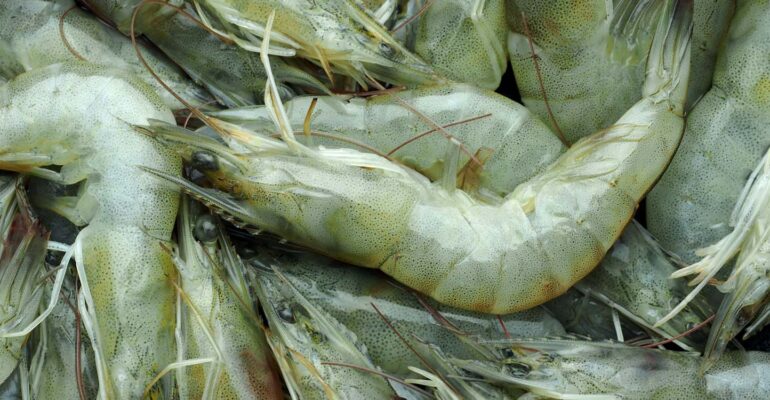
Climate change, characterized by extreme weather and prolonged heat waves, is increasingly posing a serious threat to Indonesia’s aquaculture sector. For the vanamei shrimp farming sector, unstable environmental conditions are considered the primary trigger for increased disease outbreaks and harvest failures across various pond areas.
This was stated by Prof Kukuh Nirmala, a Full Professor at the Faculty of Fisheries and Marine Sciences (FPIK) at IPB University. According to him, climate change causes the dynamics of aquaculture water quality to become unstable, making pond ecosystems easily disrupted. These conditions actually benefit pathogenic microorganisms that harm shrimp.
“Shrimp require stable and good water quality so that their energy is focused on growth, not on coping with environmental stress. When the environment is disrupted, the shrimp’s immune system weakens, and diseases can more easily attack,” he explained.
Prof Kukuh explained that one of the biggest challenges in national shrimp farming is the high incidence of disease, reaching 40,31 percent. This situation can cause shrimp mortality rates to reach 20 to 100 percent and leads to fluctuating production.
He cited a case in Kendal, Central Java, where an outbreak of infectious myonecrosis virus (IMNV) in a 46,7 hectare pond resulted in a production loss of up to 257 tons, with total economic losses reaching Rp21,3 billion.
Prof Kukuh explained that one of the main issues facing modern shrimp farms today is mineral deficiency resulting from the use of high-density polyethylene (HDPE) liners in the ponds. While HDPE effectively reduces toxic H2S gas from the pond bottom, its use also blocks the natural supply of minerals from the soil into the pond water. Consequently, the ecosystem balance becomes easily disrupted, and shrimp become more susceptible to disease.
As a solution, Prof Kukuh advocates for the application of complete macro- and micro-mineral fertilization in shrimp ponds. Based on field tests in the North Coast of Java, this method has proven capable of increasing shrimp survival rates by up to 42 percent compared to ponds without complete mineral fertilization. Pond production also increased from 14,45 tons per hectare to 20,976 tons per hectare.
“In addition to boosting productivity, proper aquaculture environmental management is also crucial for ensuring food safety. Cultivated products must be guaranteed free of hazardous residues such as heavy metals (Hg, Pb, and Cd) and free from contamination by pathogenic bacteria like E. coli and Salmonella through optimal water quality management,” said Prof Kukuh.
He also noted that the sustainable aquaculture sector holds great potential as a new economic source for Indonesia’s youth, particularly amid the demographic dividend and rising demand for jobs.
“A single hectare shrimp farm alone can require around four workers, not including supporting sectors such as feed mills, hatcheries, equipment, medications, and post harvest operations,” he explained.
Furthermore, Prof Kukuh emphasized the importance of implementing the concepts of zero waste and the circular economy in national shrimp farming. One way to do this is by utilizing aquaculture waste as agricultural fertilizer so that it does not pollute the environment.
“The primary issue that can damage the environment is aquaculture effluent. Therefore, there needs to be collaboration between the aquaculture and agricultural sectors so that aquaculture waste can be utilized as beneficial fertilizer,” he said.
Prof Kukuh hopes the government can begin adopting standardized mineral fertilization practices in national shrimp farming as part of a strategy to enhance the productivity of sustainable, environmentally friendly aquaculture, while also supporting national food self sufficiency. (Lp) (IAAS/WSG).