
More Than Just Sharing a Meal, Prof Euis Sunarti Explains the Impact of Iftar on Family Attachment
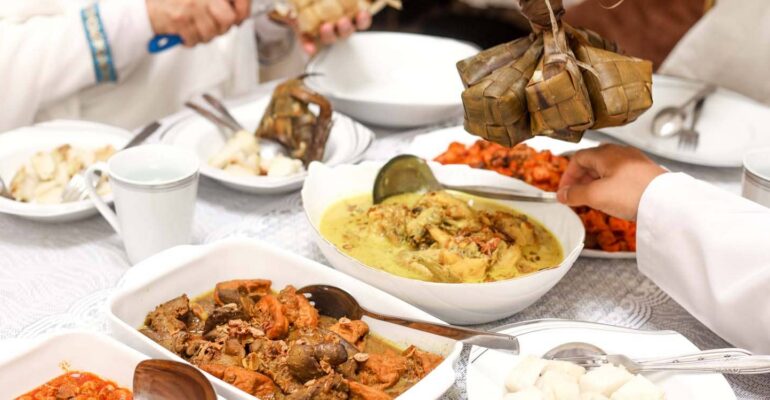
The month of Ramadan is not only a momentum for strengthening personal worship but also provides a strategic space to reinforce family relationships. The moment of breaking the fast together is considered to hold deeper social and psychological meaning compared to ordinary family mealtimes.
According to Prof Euis Sunarti, Professor of Family and Consumer Sciences at IPB University, iftar is a joyful moment for Muslims. After enduring hunger and thirst throughout the day, families gather, converse, and pray together at a time believed to be spiritually significant.
“In family science, moments like this serve as a medium to build regenerative, resilient, rhythmic, and traditionalistic family typologies. Families enhance cohesion and bonding, strengthen togetherness through family time and routines, and give deeper meaning to those moments and routines,” she explained.
She further elaborated that breaking the fast together holds special meaning because it occurs only one month each year. This momentum contributes to strengthening the expressive functions of the family, particularly in aspects of religious functioning, education, and love and affection.
“Ramadan also becomes a platform for families to invest in resilience by reinforcing family values, rules, and belief systems, enhancing family capacity, and building a positive atmosphere at home,” Prof Euis stated.
She added that the atmosphere of togetherness while waiting for the Maghrib call to prayer reminding one another to pray, sharing light conversations, and cultivating gratitude plays a significant role in fostering emotional attachment among family members. “A warm and grateful environment will enhance attachment as well as the family’s socio-psychological resilience,” she noted.
She explained, values are strengthened through the practice of breaking the fast together, including togetherness, love and affection, mutual care, sharing, helping one another, and respect.
“Ramadan reminds us that the family is an institution where individuals are interconnected, interdependent, and mutually influential,” Prof Euis emphasized.
Although there has been no specific research comparing the impact of shared iftar among nuclear families, extended families, or families with working parents, she affirmed that the underlying principle remains the same. As long as a positive atmosphere and shared values are present, the moment of breaking the fast together will generate beneficial effects for both individuals and families.
“Even light conversations while waiting for iftar play an important role. Such interactions can enhance mutual understanding and acceptance, build a positive self-concept, and serve as an investment in the components of family resilience,” she explained.
To ensure that breaking the fast together does not become merely a routine, she suggested that each family member be fully present not only physically but also emotionally and spiritually. Togetherness should be interpreted with gratitude and expressed through love and affection.
For families who cannot always break the fast together due to busy schedules, she suggested compensating by improving the quality of communication whenever opportunities to meet arise. “What matters most is not merely the frequency of meetings, but the quality of communication and the meaningfulness of togetherness,” she concluded. (Lp) (IAAS/FHD)

